| THE PLEISTOCENE COALITION | PREHISTORY IS ABOUT TO CHANGE |
Overview
![3 Musketeers, 2001[fromV_6-1-11].jpg](images/3%20Musketeers,%202001%5BfromV_6-1-11%5D.jpg) 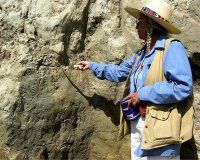
|
 Pleistocene Coalition News Challenging the tenets of mainstream scientific agendas - Issue #87 - - ARCHIVES - Issue #s 1-87 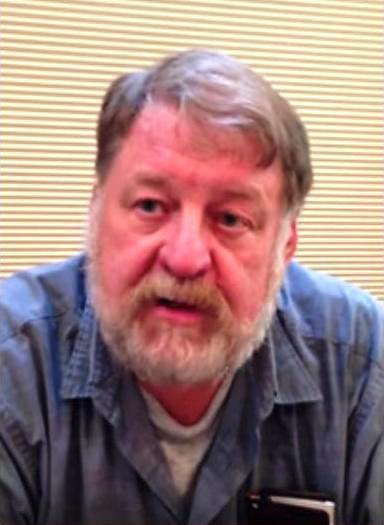 Gramly (archaeologist; mammoths, mastodons, lithics worldwide) 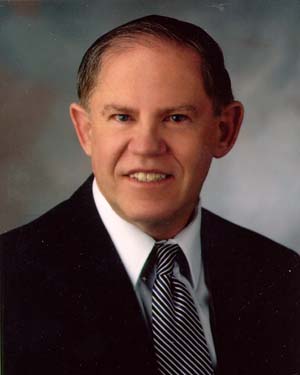 Peratt and Yao (plasma physics, astronomy, international rock art)  OriginsNet.org (James B. Harrod; early religion, symbolism, and linguistics)  Leduc (geological engineer)  Rock art in Delhi, India (Thakur, discoverer previously unrecorded petroglyphs, menhirs)   Neuhauser (neurolgy, early human culture)   Gallery  Macnab (symbolism and design)  McCormack (archaeology, consciousness)  Whittall (cryptozoology, past human history, enigmas) ![tn_bilzingsleben-tony-mitton09[jfcrop].jpg](images/tn_bilzingsleben-tony-mitton09%5Bjfcrop%5D.jpg) Mitton (PC depiction of Bilzingsleben geometer) |
 Challenging the Myth (Reassessing Paleolithic cognition; paleontology)  VanLandingham (geologist, diatomist; oldest archaeological sites in the Americas)  Baldwin (Homo erectus capabilities, pre-Clovis earliest Americans)  Van der Drift (stone tool production expert) ![tn_000_Makuyuni66%[Lutz-fig-fromJorn4-8-10]cropped&grayscaled-h600.jpg](images/tn_000_Makuyuni%5BLutz-fig-fromJorn4-8-10%5Dcrop&grayh600.jpg) Fiedler (archaeology, cognition and culture)  DreamRaiser (archaeologist Vesna Tenodi; the politics of Australian archaeology; truth in science) "Valsequillo Enigma" "Early Man SUPPRESSED" DVDs  Greve (neurology, early human culture)   Bonnye Matthews (pre-Clovis fiction incl Valsequillo Hueyatlaco)  Steeves (indigenous peoples database incl sites only known to indigenous peoples)  Babel's Dawn (linguistics, symbolism)  Groups on the edge (anomalous stone artifacts incl American Levallois; figure stones) 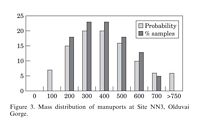 Cannell (mainstream, hominids, engineering) |
Steen-McIntyre (geologist; oldest archaeological sites in the Americas - suppressed 50 years) ![tn_51+sRk3WgFL._SL500_AA246_PIkin2,BottomRight,-13,34_AA280_SH20_OU01_[h90].jpg](images/tn_51+sRk3WgFL._SL500_AA246_PIkin2,BottomRight,-13,34_AA280_SH20_OU01_%5Bh90%5D.jpg) Hardaker (archaeologist; Pre-Clovis in the Americas)  Urbaniak (U.S. parietal rock art discovery, Native American implications, preservation) ![tn_james reid moir[fromV_7-8-11]contrast+20_h65.jpg](images/tn_james%20reid%20moir%5BfromV_7-8-11%5Dcontrast+20_h65.jpg) Classic British Archaeology (Dullum & Lynch lifting crucial discoveries from obscurity)  Cremo (Forbidden Archeology brought Dr. Steen-McIntyre's story of suppression to the public)  Goodman (geologist, mining engineer, Flagstaff Stone, early Americas - suppressed 40 years) ![tn_Horse projection-Matt'sField Reconstructions-page[htopsequ]crop.jpg](images/tn_Horse%20projection-Matt%27sField%20Reconstructions-page%5Bhtopsequ%5Dcrop.jpg) Gatton (paleo-camera theory and Paleolithic cognition)  Anarchaeology (archaeological anomalies) 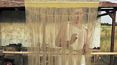 Gheorghiu (experimental archaeology; Paleolithic-Neolithic religion and ritual)  Winkler (conceptual installation art on premise of high Paleolithic cognitive ability, linguistics)  Jègues-Wolkiewiez (Lascaux time & measure) ![tn_Rex,_NC_LiDAR_DEM_of_Carolina_bays[reduced-to150from300dpi].jpg](images/tn_Rex,_NC_LiDAR_DEM_of_Carolina_bays%5Breduced-to150from300dpi%5D.jpg) The Cosmic Tusk (extraterrestrial impacts)  Udell (artistic spirit of paleoart reconstruction)  Mayor (mythology, unexpectedly early science; open-minded mainstream)  Weishaus (dream imagery art, prehistoric psychology) |


|
|
 |
 |
 |
 ![tn_Winkler_M_Ancient Art & Modern Language Draft[4-24-10]_1_0001.jpg](images/Winkler_M_Ancient%20Art%20&%20Modern%20Language%20Draft%5B4-24-10%5D_1_0001.jpg) |
|
|
|
"I never submitted the whole system of my opinions to the creed of any party of men whatever, in religion, in philosophy, in politics, or in anything else where I was capable of thinking for myself." - Thomas Jefferson, 1789 -
|
|
|
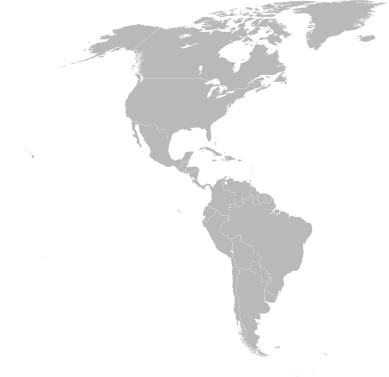
Researchers with evidence challenging the standard view of early man
as promoted by mainstream science

|
|
|
Join us! BEGIN EXPLORING HUMAN PREHISTORY FROM A PERSPECTIVE UNLIKE ANYTHING YOU HAVE BEEN TAUGHT IN GRADE SCHOOL OR UNIVERSITY WHICH IS SCIENTIFICALLY ACCURATE AND COMPLIMENTARY TOWARD THE WORLD'S EARLY PEOPLES... ...YOUR ANCESTORS ![paleocameraPC1[fromMatt5-16-10]filesize-reduce-convert-to-grayscale[resofrom72to150_h4''].jpg](images/paleocameraPC1%5BfromMatt5-16-10%5Dfilesize-reduce-convert-to-grayscale%5Bresofrom72to150_h4%27%27%5D.jpg)
then you belong with us!
|
|
|
 PLEISTOCENE COALITION
MEMBERS (cont.)
PLEISTOCENE COALITION
MEMBERS (cont.)Researchers with evidence challenging the standard view of early man as promoted by mainstream science
| Paleo-camera | ¯¯¯¯¯¯¯ United
States The website of Matt Gatton. "Harsh climates in the Paleolithic era forced humans and their predecessors to adopt heat-retaining dwelling strategies, including the use of hide tents in cave mouths, under rock overhangs, and in the open. Small random holes in these hide tents would have coincidentally and occasionally formed camera obscuras, projecting moving images inside the dwelling spaces. These ghostly images carried with them spiritual, philosophical, and aesthetic implications." Website: Book chapter by Matt Gatton -
2009.
"First light: Inside the Palaeolithic camera obscura," in Acts
of seeing: Artists, scientists, and the history of the visual
Recently-published proceedings paper: - Gatton, M., L. Carreon, M.
Cawein, W. Brock, V. Scott. 2010. The
Camera Obscura and the Origin of Art: The Case for Image
Projection in the Paleolithic. In Fidalgo C., and
L. Oosterbeek (vol. eds.), Proceedings
of the XV UISPP World Congress (Lisbon, 4-9 September 2006) 35,
BAR S2108, Oxford.
Articles
in PC News:-
Paleo-camera and the concept of
representation
(Issue 5)
Article
in PC News
#7, FIRST ANNIVERSARY ISSUE:- Paleo-camera, Phase II: Projected images in art and ritual (Issue 6) - Projecting projection: a statistical analysis of cast-light images By Matt Gatton and Leah Carreon (Issue 18) - The keystone effect in Upper Paleolithic cave art By Matt Gatton (Issue 54) Article in PC News #18, with Matt Gatton and Leah Cerreon Paleo-camera updates |
![tn_paleocameraPC1[fromMatt5-16-10]filesize-reduce-convert-to-grayscale[resofrom72to150_h4''].jpg](images/tn_paleocameraPC1%5BfromMatt5-16-10%5Dfilesize-reduce-convert-to-grayscale%5Bresofrom72to150_h4%27%27%5D.jpg) |
| Alan Cannell | ¯¯¯¯¯¯¯ Brazil International civil engineer and author of Throwing behaviour and the mass distribution of geological hand samples, hand grenades and Olduvian manuports. Pleistocene Coalition webpage: Slide show by Alan Cannell: Articles in PC News: - The next decade: What do you think
will happen?
(Issue 3)
- Deep roots of aesthetic design: Winklepickers and Phi (Issue 3) - Phi, beauty, and the Neolithic (Issue 4) - Chimps and bonobos: Gently putting the molecular clocks back (Issue 4) - Google Earth as a support tool in paleoanthropology (Issue 5) - Sexual selection in archaic populations: Were Neanderthals 'cute' in their own way? (Issue 6) - How do you keep the wolf from the door when the door has yet to be invented? Chimpanzee/bonobo morphing (Issue 10) - 'Mainstream' terminology: How to stay politically correct in these changing paleoanthropological times (Issue 15) - Of wondrous cave art and smart mules (Issue 20) - Atmospheric pressure, sea levels, and land temperatures during glacial maxima (Issue 23) - Sex in the canyons: What a little moonlight can do (Issue 27) - Alan Cannell mainstream publication by Virginia Steen-McIntyre (Issue 30) Articles in PC News, FIRST ANNIVERSARY ISSUE: - Archaic
populations and modern humans, parts 1 & 2
(Issue 7)
- The curious case of KSD-VP-1/1: In which afarensis becomes more modern the older it gets (Issue 7) TWO-PART SERIES in PC News 8 & 9: - THE DMANISI HOMINIDS Part 1: Uplift, Altitude and
Coastal Location
(Issue 8)
- THE DMANISI HOMINIDS Part 2: Heights and Brains (Issue 9) |
Click on the above image to go directly to Alan's paper on Throwing Behaviour. |
| Archives of Cultural Exchanges |
¯¯¯¯¯¯¯ United States This website specializes in unexpected links between widely-separated cultures and civilizations. It offers a large database of evidence for early contact between cultures of the Old World and the New World long before the voyages of Columbus and others in the European "Age of Exploration." Its aim extends into prehistory. Archaeological evidence for earlier contact than promoted by the mainstream science and historical communities includes appearance of new food crops, animals, calendars, religious practices, medical procedures, genetics, etc. The Archives' main focus is on early interaction between cultures located on opposite sides of the Atlantic or Pacific Oceans; i.e. between the Eastern Hemisphere and the Americas. The website's moderators are Carl L. Johannessen, Ph.D, Professor Emeritus at the University of Oregon, Dept. of Geography; and John L. Sorenson, Ph.D, Professor Emeritus at Brigham Young University, Dept. of Anthropology. They are co-authors of the ground-breaking book, World trade and biological exchanges before 1492 (2009). This comprehensive and rigorous volume was rejected for publication by mainstream presses and university presses alike. The blocking of evidence that does not adhere to mainstream views is a common problem for researchers who are challenging scientific dogma and is one of the primary reasons that the Pleistocene Coalition was formed. Johannessen's story in brief: In the 1960's, Dr. Johanessen began research into the domestication of plants and animals in Central America followed by investigations in the Himalayan region of Asia which were funded by grants from the National Science Foundation. Noticing the similarity of crops such as corn, beans, and squash which had not been observed before, Johannessen began to postulate that contact between cultures on opposite sides of the globe began long before the eras commonly taught. It was at this point that the grant money came to a halt. Johannessen suggests this happened because of mainstream allegiance to the idea of no early contact between the hemispheres and that sculptures depicting corn in East Indian temples, for example, that Johannessen provided as evidence could not possibly depict corn (See images at right and develop your own opinion). Despite these setbacks, like others in the Coalition, Johannessen and Sorenson (author of Pre-Columbian contact with the Americas across the oceans) continue to move forward with their research developing a compelling and expanding case for early contacts extending farther and farther back in time. Related articles in PC News: - Let
the review stand: Gloria Farley debate, by Carl L Johannessen
(Issue 3)
- World trade and biological exchanges before 1492, book review by Peter Faris (Issue 4) - News: Archives of Cultural Exchanges website now up and running (Issue 11) |
 Above: Pre-Columbian temple sculpture in India depicting a woman holding an ear of corn as a likely fertility symbol. "Maize breeders in India, China, United States, and Great Britain, who have seen extensive collections of the illustrations, concur...only sculptors with abundant ears of maize as models could have created these illustrations of maize" (Click to enlarge). Below: Similar sculpture at a different temple. Photos by Carl L. Johannessen. 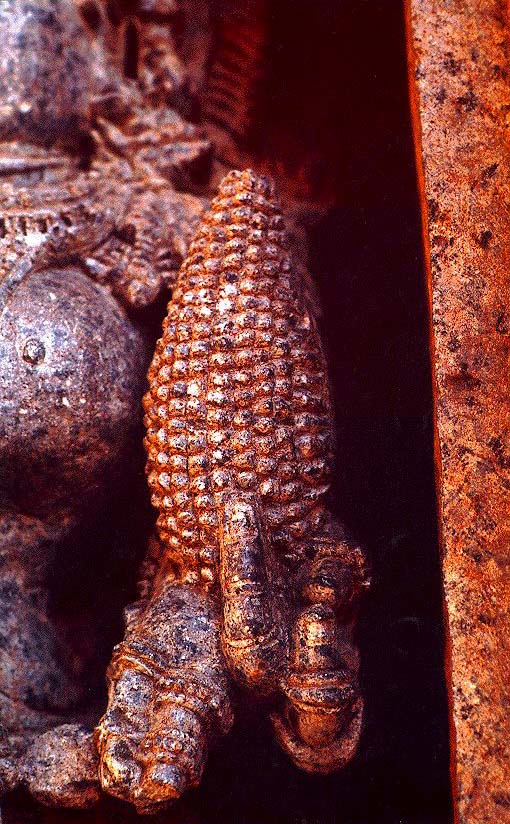 |
| Groups on the Edge | ¯¯¯¯¯¯¯ International In the past several years not only have researchers battling suppression questioned the objectivity behind mainstream science and anthropology but so has an increasingly Internet-savvy general public. Online researchers are less inclined to simply trust science once they realize that a single ideology rather than scientific objectivity has been driving interpretations of evidence in areas as important as human origins or human prehistory. Prior to the Internet, the peer review system in anthropology so effectively blocked conflicting data from publication that the general public had no way of knowing that conflicting data even existed; it believed that mainstream science was giving them a true and balanced interpretation of all known evidence. However, the Internet has changed everything; more people are privy to the fact that dissenting evidence—awareness of which is an absolutely crucial part of critical thinking and objectivity—is being withheld in anthropology while selected evidence is being presented as unchallenged and in the context of what is increasingly being recognized as a belief system or worldview. As a response, more and more people have joined together to form discussion groups to weigh out the evidence for themselves, express doubts, and otherwise openly challenge proclemations in anthropology presented as science that would never pass as science in any other field. This page will contain links to various such groups. It should make no difference to readers whether these groups are motivated by science alone or contain members whose concerns include religions or philosophies. What matters, and what skeptics should pay attention to, is that these groups have mounting empirical reasons to doubt the veracity and objectivity of what is presented to them as fact by mainstream science. In one way or another, groups of this nature support a premise of the Pleistocene Coalition that mainstream scientific behaviors such as suppression of conflicting data need to be fought, that is, unless we are all content to become puppets of an international belief system presented as science yet which is somehow immune to the standard scientific requirement of testability in real time. IMPORTANT NOTE: Most of these groups feature regular contributions by mainstream scientists though these contributors, for obvious reasons, often write under the safety of anonimity via avatar or nicknames. It is likely that many of these scholars will come out publicly when the paradigm changes and the evidence begins to be weighed in an equitable manner. |
 |
| Jörn Greve | ¯¯¯¯¯¯¯ Germany "There has to be stated a continuous line showing how ethnocentristic our scientific view is focussed and thereby rejecting our ancestors like the Neandertals as being only another aberration and not at all a part of our ancestral line." -Jörn Greve, PD, MD, neurologist, author "Pre-Symbolic Interaction and the Palaeo-Ecology of Religion." Pleistocene Coalition webpage: Articles in PC News: -
Diversity not Darwinism, Jörn
Greve, Gerhard Neuhäuser
(Issue 2)
- Does symbolism represent progress? Jörn Greve, Lutz Fiedler (Issue 2) - Ardi and Ida: On their way - not only out of Africa, Jörn Greve, Gerhard Neuhäuser (Issue 4) - Determinants of human development - exemplified by Homo floresiensis, Jörn Greve, Gerhard Neuhäuser (Issue 6) - Approaching prehistoric "art" by socio-systemic dating of the Cussac Cave engravings, Jörn Greve and Gerhard Neuhäuser (Issue 10) - Which factors could have caused the expansion of Modern Man - impact, hazard or transition? Jörn Greve and Gerhard Neuhäuser (Issue 13) - An objective reassessment of "Evo-Devo" and selection theory,Jörn Greve and Gerhard Neuhäuser (Issue 19) - Pre-symbolic interaction and the paleo-ecology of religion, Part 1,Jörn Greve and Gerhard Neuhäuser (Issue 26) - Pre-symbolic interaction and the paleo-ecology of religion, Part 2,Jörn Greve and Gerhard Neuhäuser (Issue 27) |
Neanderthal range in Europe and the
Middle East charted by Ryulang
|
| ¯¯¯¯¯¯¯ Germany Department of Pediatrics, Neurology (retired), Justus-Liebig-University in Giessen. Head of Child Neurology and Social Pediatrics, 1978-2001. Professor Neuhauser is especially interested in developmental problems and neurobiology of behavior. Pleistocene Coalition webpage: Articles in PC News: -
Diversity not Darwinism,
Jörn Greve, Gerhard Neuhäuser
(Issue 2)
- Ardi and Ida: On their way - not only out of Africa, Jörn Greve, Gerhard Neuhäuser (Issue 4) - Determinants of human developoment - exemplified by Homo floresiensis, Jörn Greve and Gerhard Neuhäuser (Issue 6) - Approaching prehistoric "art" by socio-systemic dating of the Cussac Cave engravings, Jörn Greve and Gerhard Neuhäuser (Issue 10) - Which factors could have caused the expansion of Modern Man - impact, hazard or transition? Jörn Greve and Gerhard Neuhäuser (Issue 13) Greve and Gerhard Neuhäuser (Issue 13) - An objective reassessment of "Evo-Devo" and selection theory,Jörn Greve and Gerhard Neuhäuser (Issue 19) - Pre-symbolic interaction and the paleo-ecology of religion, Part 1,Jörn Greve and Gerhard Neuhäuser (Issue 26) - Pre-symbolic interaction and the paleo-ecology of religion, Part 2,Jörn Greve and Gerhard Neuhäuser (Issue 27) |
 |
|
| Beth McCormack |
¯¯¯¯¯¯¯ United States Beth McCormack's background and interests are diverse. She did her dissertation (M.A. Univ. of Reading, UK) on altered states of consciousness and is interested in Lower Palaeolithic societies as well as exploring the union of art and science. McCormack has studied data from Lower Palaeolithic sites such as Bilzingsleben and applied ideas formulated by those studies to the prehistoric passage graves of Wales and Ireland. Also influencing McCormack's approach to archaeology is a strong background in music. She is currently studying Neanderthal musical culture as well as Palaeolithic campsites. McCormack is project manager and editor for a U. S. archaeological company. Pleistocene Coalition webpage: Articles in PC News: |
|
| Paulette Steeves | ¯¯¯¯¯¯¯ United
States Paulette Steeves is a Graduate student and PhD candidate at Binghamton University, New York, under the Clifford D. Clark Fellowship program, 2008-2013, with technical training in molecular anthropology and archaeology. Steeves is First Nations Cree. She was born in the Yukon Territories, Canada, and grew up among the very traditional Salish people of British Columbia. Steeves' website, which is in process, will feature a comprehensive database of nearly 500 archaeological sites in the Americas dating as far back as several hundred thousand years. The database will incorporate not only well-known sites excavated from a European mindset but sites known foremost to indigenous American peoples. The website will also feature plotted maps, migration routes, and sea-level charts in time zones such as 20-40,000 years ago as well as evidence of 60,000 playa lakes in what is now desert area of the U. S. Western plains. Website:Articles in PC News, FIRST ANNIVERSARY ISSUE: - Deep Time Ancestors in the
Western Hemisphere
(Issue 7) - Decolonizing Pleistocene archaeological research in the Americas (Issue 16) About Paulette Steeves: - Book review [The Indigenous Paleolithic of the Western Hemisphere]
by Tom Baldwin (Issue 80)
- Eds. note: A success of the PC John Feliks (Issue 80) |
|
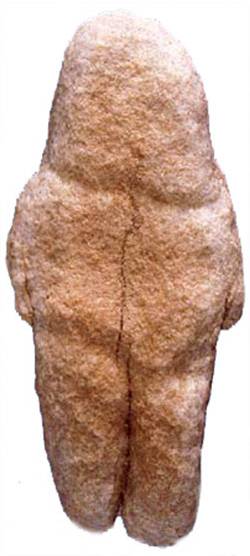
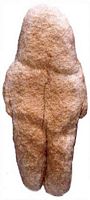
| Lutz Fiedler | ¯¯¯¯¯¯¯ Germany State archaeologist, Hesse, Germany. Fiedler is the discoverer of the early Stone Age (Acheulian) figurine known as the "Venus of Tan-Tan" which is regarded as one of the earliest examples of sculpture in archaeology. It was found during excavations on the north bank of the River Draa in Morocco right next to Acheulian handaxes between undisturbed layers dated 300,000-500,000 years old. Fiedler is not averse to questioning the tenets of mainstream archaeology and has even gone so far as to question the emphasis and importance typically placed upon symbolism as a sign of advanced human behavior. Pleistocene Coalition webpage: Articles in PC News: -
Does symbolism represent
progress?,
Jörn Greve and Lutz Fiedler (Issue
2)
- At the core of language and culture, Lutz Fiedler (Issue 5) - The Mousterian structures of La Ferrassie: Peyrony's 1934 results revisited, Lutz Fiedler (Issue 13) - Response to California’s BLM/big business threats to Calico Early Man Site (Issue 72) - Anthropological news from the Central-European region of the Old World Lutz Fiedler, Herbert Preisl and Hartmut Thieme (Issue 78) |
 |
| Decoding Design | ¯¯¯¯¯¯¯ United
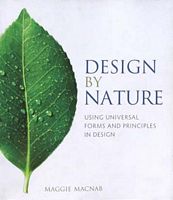
States Maggie Macnab is an international award-winning graphic designer, author and educator with a career spanning several decades. Her work has received top honors throughout her career and has been recognized by leading design publications such as Communication Arts, Print, and Step-by-Step, as well as by organizations such as the Art Directors Club of New York and AIGA (American Institute of Graphics Arts). Macnab has taught design theory in the Digital Arts Program at the University of New Mexico since 1997 and for the Santa Fe University of Art and Design and is also past president of the Communication Artists of New Mexico. Apart from speaking at conferences, she leads workshops on creativity. Macnab is the author of two leading design books, Decoding Design: Understanding and Using Symbols in Visual Communication (2008) - which has won awards and accolades - and, Design by Nature: Using Universal Forms and Principals in Design (2012), each of which have been translated into Chinese, Korean and Spanish. Macnab is also a lecturer in the popular TEDx program (ideas worth spreading). Macnab's research revolves around creative problem-solving and links between artistic expression and nature. She traces cultural iconography back to origins in the natural world. Macnab's perspective and scientific approach to the roots of design were influenced by a unique childhood background. Her mother was an architect with John Gaw Meem. Macnab's father, a poet and writing teacher at the Institute of American Indian Arts, encouraged her interest in nature and creativity early on by giving her a microscope and reading her science fiction shorts as bedtime stories. He also taught her how to observe and draw nature, taking Macnab camping by horseback in the high deserts of New Mexico including places such as Chaco Canyon, the Sangre de Cristo Mountains, Puye Cliffs, and the Santa Fe River on Upper Canyon Road, as well as Big Bend National Park in Texas. Macnab left school at sixteen and is for the most part self taught. Amazon reviews: "I would rank
this book as the top design book of the decade." -on Decoding Design Websites: |
  |
The Cosmic Tusk |
¯¯¯¯¯¯¯ United
States Subtitle: Abrupt climate change induced by comets and asteroids during human history. This is the website and blog of George Howard, BA, Political Science, co-author of the Firestone et al paper, Evidence for an extraterrestrial impact 12,900 years ago that contributed to the megafaunal extinctions and the Younger Dryas cooling, PNAS, 2007. The full paper is available free online. Howard is an expert on the phenomena known as Carolina Bays including field work and analysis and has also produced several posters on the topic. (Carolina Bays are large oval impressions ranging in size from one to several thousand acres which are found in the Atlantic seaboard states of Delaware, Maryland, New Jersey, North Carolina, South Carolina, Virginia, Georgia, and Florida. There are as many as 500,000 Carolina Bays which, for the most part, are all aligned in exactly the same direction.) Howard's blog investigates the Bays and other impact-related phenomena (both proven and unproven) with a focus on the proposed Younger Dryas Event. Howard's background also includes six years as a political staffer in the U.S. Senate as well as being actively involved in the restoration of natural habitats. Website: Articles
in PC News:
|
![tn_Rex,_NC_LiDAR_DEM_of_Carolina_bays[reduced-to150from300dpi].jpg](images/Rex,_NC_LiDAR_DEM_of_Carolina_bays%5Breduced-to150from300dpi%5D.jpg) Digital elevation map centered on Rex, North Carolina (Robeson County). showing extent of the Carolina Bays in this single 600 sq. km region. Click on the zoomable image to see the remarkable phenomenon of Carolina bays. |
| Michael Cremo |
¯¯¯¯¯¯¯ United States
Michael A. Cremo is a long-time researcher on the topic of human origins and human antiquity. He is best known for his comprehensive volume, Forbidden Archeology (which he co-authored with the late Richard Thompson, Ph.D, Mathematics), and its follow-up, The Hidden History of the Human Race (The Condensed Edition of Forbidden Archeology), as well as for the controversial television special, The Mysterious Origins of Man, hosted by Charlton Heston. His most recent book is The Forbidden Archeologist: The Atlantis Rising Magazine Columns of Michael A. Cremo. Cremo has also been featured in the Ancient Aliens television series now in its fourteenth season. Pleistocene Coalition webpage: Websites:
- The Calaveras skull
(Issue 8)
- Data blocking by threat and intimidation (Issue 9) - Valsequillo, Forbidden Archeology, and I (Issue 12) - Forbidden Archeology and Virginia Steen-McIntyre (Issue 56) - Thoughts on Homo luzonensis (Issue 59) - PCN-Cerutti timeline correction and a 'twin' suppression [Involving Michael Cremo and Dr. Virginia Steen-McIntyre] (Issue 65) - PC-relevant excerpts Forbidden Archaeology: Hiding Our Past at Hueyatlaco Mexico [Earth Ancients podcast October 10, 2020] (Issue 70) - Special contribution to Richard Dullum's Benjamin Harrison, Part 3 article, "Beginning of the Eolith Debate" (Issue 77) |
 |
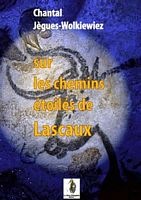
| Chantal Jègues-Wolkiewiez | ¯¯¯¯¯¯¯ France Chantal Jègues-Wolkiewiez, Ph.D, Anthropology, M.A. Psychology, Ethno-astronomy, is a long-time Paleolithic researcher who received her doctorate with special honors and congratulations of the Jury. She has specialized in the time-keeping and astronomical capabilities of the people of Lascaux Cave in France. Jègues-Wolkiewiez' first book, sur les chemins étoilés de Lascaux, presents in a fictional setting her theories about the astronomical knowledge and knowledge of space and time of the people of Lascaux Cave in France. See Blog la table d’Hermes for a review with excerpts in French. The book—in a way similar to Tom Baldwin’s, The Evening and the Morning—challenges the standard view of our ancestors making their abilities and sentiments, not unlike our own, the foundation rather than limitations as taught by mainstream science. Website:Articles in PC News: |
 |
| Classic British Archaeology | ¯¯¯¯¯¯¯ USA/UK This is the ongoing research project of Richard Dullum and Kevin Lynch focusing on early British archaeology. Their research includes locating rare historical documents and important artifacts presently known only from the literature, as well as the physical locations of important long-forgotten archaeological sites. Dullum is a surgical R.N. working in a large O.R. for the past 30 years as well as a long-time researcher in early human culture. He is also a Vietnam vet with a degree in biology. Lynch is a retired British businessman, archivist and member of the Prehistoric Society of Britain. He lives in Suffolk, UK, at Walton-on-the-Naze near the largest exposed cliffs of the Red Crag Formation. Lynch's specialty is British archaeology of the late 19th and early 20th centuries concentrating on the life and works of J. Reid Moir (pictured at right). Articles in PC News:-
The
artistic impulse as seen through prehistory: Beads, by Richard Dullum
(Issue 3)
- Coloring their world in the Ice Age: Pigment use by Paleolithic man, by Richard Dullum (Issue 4) - The Red Crag portrait, an enigmatic shell artifact from the late Pliocene of Great Britain, Richard Dullum (Issue 10) - Ancient tools of the Crag: Lithic evidence for early man in and under the Norwich and Red Crag Formations of Britain, Richard Dullum and Kevin Lynch (Issue 12) -
Ancient
tools of the Crag, Part 2,
Richard Dullum and Kevin Lynch (Issue
14)
- Ancient tools of the Crag, Part 3, Richard Dullum and Kevin Lynch (Issue 14) - Who was Red Crag Man? Richard Dullum (Issue 16) - James Reid-Moir's Darmsden legacy, Kevin Lynch and Richard Dullum (Issue 18) - BOOK REVIEW: My science, my religion; Academic papers (1994=2009) by Michael A. Cremo, Richard Dullum (Issue 21) - Darmsden Pit: at the edge of British archaeology, Kevin Lynch and Richard Dullum (Issue 22) - James Reid-Moir was right on track 100 years ago proven by 850,000-year old footprints recently discovered in Happisburgh, Norfolk, U.K., Richard Dullum and Kevin Lynch (Issue 28) - James Reid-Moir FRS, 1879-1944, Kevin Lynch and Richard Dullum (Issue 29) - Researchers Kevin Lynch and Richard Dullum bringing a forgotten hero of archaeology back into public awareness, Member news and other info (Issue 30) - The Ipswich Skeleton: a possible link to Happisburgh, Richard Dullum and Kevin Lynch (Issue 31) - Reclaiming ancient man in East Anglia: A homage to James Reid-Moir’s foresight in light of recent finds in Norfolk, U.K., and Lake Turkana, Kenya, Richard Dullum and Kevin Lynch (Issue 34) - BOOK REVIEW: Darwin's Doubt, by Stephen C. Meyer, Richard Dullum (Issue 35) - Happisburgh implements: Today, Kevin Lynch and Richard Dullum (Issue 36) - Following Moir along the Norfolk coast at West Runton and Cromer, Kevin Lynch and Richard Dullum (Issue 38) - A lithic site at West Runton, Norfolk, Kevin Lynch and Richard Dullum (Issue 39) - The repeatability factor of Moir's discoveries Richard Dullum and Kevin Lynch (Issue 40) - Smithsonian challenged at traveling exhibit, "Exploring Human Origins," Richard Dullum (Issue 41) - 1.84 million-year old "modern human" bone being promoted as "not" H. sapiens, Richard Dullum (Issue 42) - Lithics and relics of East Anglia, U.K., Part 1, Kevin Lynch and Richard Dullum (Issue 43) - Lithics and relics of East Anglia, U.K., Part 2: a.) Perforated flint, b.) Bone implement, Kevin Lynch and Richard Dullum (Issue 44) - Lithics and relics of East Anglia, U.K., Part 3: I should collect stamps! Kevin Lynch and Richard Dullum (Issue 45) - Hand axes dredged up on North Essex beach and who might have made them Richard Dullum and Kevin Lynch (Issue 48) - Hand axes dredged up on North Essex beach and who might have made them, Part 2 Richard Dullum and Kevin Lynch (Issue 49) - Archaeological research: A personal journey Richard Dullum (Issue 53) - I turn detective to hunt down Reid-Moir's lost trunk Kevin Lynch (Issue 53) - ESR finds conclude that Homo antecessor from Atapuerca, Spain, is nearly 1 MYa old: Its relevance to pre-Ice Age people in Britain Richard Dullum (Issue 54) - Following the science wherever it might lead Richard Dullum (Issue 56) - Relevant reprint: 1.84 million-year old "modern human" bone being promoted as "not" H. sapiens, Richard Dullum (Issue 57) - 8 proofs the 'ships not seen' effect causes scientific error in anthropology, biology, and paleontology Compilation of observations by Tom Baldwin, Richard Dullum, John Feliks and Dr. Virginia Steen-McIntyre (Issue 65) - ESR finds conclude that Homo antecessor from Atapuerca, Spain, is nearly 1 MYa old: Its relevance to pre-Ice Age people in Britain - Benjamin Harrison, of Ightham (1837–1921), and his central role in the eolithic controversy Richard Dullum (Issue 75) - Benjamin Harrison, of Ightham, Part 2: More about Kent than meets the eye Richard Dullum (Issue 76) - Benjamin Harrison, of Ightham, Part 3: Teaming up with Prestwich: Beginning of the Eolith Debate Richard Dullum (Issue 77) - Benjamin Harrison, of Ightham, Part 4: Prestwich's argument for the Kent Plateau eoliths' artificiality, 1889–1892 Richard Dullum (Issue 78) - Benjamin Harrison, of Ightham, Part 5: The Eolithic debate: How it started in England and its impact on prehistory Richard Dullum (Issue 80) - Benjamin Harrison, of Ightham, Part 6: Harrison's reputation spreads as debate over eoliths continues Richard Dullum (Issue 81) - Benjamin Harrison, of Ightham, Part 7: Harrison challenged! Criticism ensues over eoliths' artificiality Richard Dullum (Issue 82) - Montana megaliths, Part 1 Richard Dullum (Issue 83) - Montana megaliths, Part 2: Our curious past Richard Dullum (Issue 84) - Montana megaliths, Part 3: A closer look at Sage Wall and Tizer Dolmen Richard Dullum and Sean Harasymchuk (Issue 85) - Montana megaliths, Part 4: The clearly non-natural features of Sage Wall and Tizer Dolmen Richard Dullum and Michael Collins (Issue 86) - Montana megaliths, Part 5 Richard Dullum and Sean Harasymchuk (Issue 87) |
![tn_james reid moir[fromV_7-8-11]contrast+20.jpg](images/tn_james%20reid%20moir%5BfromV_7-8-11%5Dcontrast+20.jpg) |
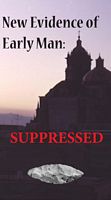
| New DVDs: Marshall Payn/Bill Cote | ¯¯¯¯¯¯¯ United States Valsequillo: An Archaeological Enigma Length: 2 hours 20 minutes including the director’s new 30-minute final section Description: This is what we call the ‘Academic Version.’ It tells the story with more emphasis on the science and more detail given to the tests and scientific explanations and arguments. New Evidence of Early Man: SUPPRESSED Length: 84 minutes plus a BONUS Disc (disc 2) which contains over 1 1/2 hours of all new material including interviews with Virginia Steen-McIntyre, Hal Malde, Mike Waters, Neil Steede and Marshall Payn, as well as photos, charts and illustrations. Description: This is what we call the ‘Broadcast Version.’ It simplifies the science and tells the story in a way best suited for the non-scientific viewer. It's a bit more sensational than the Academic Version. The DVDs can be ordered direct from BC Video (below). See Bill Cote's update in Issue #19 of Pleistocene Coalition News for details. Marshall Payn is a mechanical engineering graduate from M.I.T., and 30-year veteran of archaeological research. Among many other accomplishments and pursuits, Payn is the owner of 23 businesses; an author, songwriter, deep-sea fishing champion, and pilot as well as an award-winning documentary film producer with films on a variety of topics including Hueyatlaco, alternative medicine, and early Christianity. Bill Cote is a documentary filmmaker producing popular television specials such as the Emmy-winning film, The Mystery of the Sphinx (1993) and The Mysterious Origins of Man (1996), each hosted by Charlton Heston. The latter film was the first time the public at large had heard about Hueyatlaco and the story of Virginia Steen-McIntyre (although these had been introduced to the academic community in Michael Cremo’s and Richard Thompson’s controversial book, Forbidden Archeology, 1993). In addition to a 2007 update of The Mystery of the Sphinx, Cote's most recent films on the topic of early man are Valsequillo: An Archaeological Enigma and New Evidence of Early Man: SUPPRESSED. Update on the YouTube film, SUPPRESSED New Evidence of Early Man:- New documentary about Hueyatlaco, featuring PC founding members, passes one million views (Issue 32)
Website: Articles in PC News: |
  |
| Babel's Dawn | ¯¯¯¯¯¯¯ United
States The website of Edmund Blair Bolles, author of Einstein Defiant, Galileo's Commandment, and The Ice Finders: How a Poet, a Professor, and a Politician Discovered the Ice Age. Babel's Dawn is a highly-rated blog about the origins of speech. DISCUSSION FORUM Website: |
|
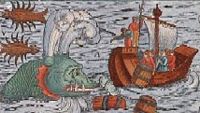
| Patagonian Monsters | ¯¯¯¯¯¯ Argentina The website of Austin Whittall, engineer, Vicente López, Buenos Aires, Argentina, and author of Patagonian Monsters: A guide to Patagonia's mythical (and real) monsters and legendary beasts (in press). Whittall's blog contains a fascinating array of postings not only related to the field of cryptozoology but also about the past history of humankind and all manner of anomalies and enigmas.
|
 |
| DreamRaiser project | ¯¯¯¯¯¯
Australia / Croatia Vesna Tenodi Websites:
-
Mungo Man and Kow Swamp: different roots
(Issue 18)
- Wanjina & Bradshaw-style rock art in other parts of the world (Issue 19) - Wanjinas now - Contemporary artists reviving pre-Aboriginal Australian rock art (Issue 20) - Forbidden art and politicized archaeology (Issue 21) - Problems in Australian art and archaeology (Issue 22) - A renaissance in Neanderthal studies (Issue 23) - Neanderthal-Denisovan-Aboriginal DNA connection (Issue 24) - Open letter to Svante Pääbo and the Max Planck Institute (Issue 25) - Contrasting Georgia's handling of Nomo georgicus with Australian archaeology (Issue 26) - Brain matters (Issue 27) - Brain matters, Part 2 (Issue 28) - Brain matters, Part 3: What determines intelligence (Issue 29) - Brain matters, Part 4: Open mind versus closed mind - The view from Australia (Issue 29) - Report from Croatia: Vesna Tenodi's controversial 'dreamtime' sculpture moved 10,000 miles, Member news and other info (Issue 30) - Australian archaeological paradox: Did Homo erectus linger here? (Issue 30) - Australian past, present, and future - Part 1 (Issue 31) - Australian past, present, and future - Part 2 (Issue 32) - Decoding the messages of pre-Aboriginal rock art - Part 1 (Issue 33) - Decoding the messages of pre-Aboriginal rock art - Part 2 (Issue 34) - Decoding the messages of pre-Aboriginal rock art - Part 3 (Issue 35) - Australian archaeology, art, and politics intertwined (Issue 36) - Global perspective on Australian archaeology (Issue 37) - Pleistocene underground, Part 1 (Issue 38) - Pleistocene underground, Part 2 (Issue 39) - Pleistocene underground, Part 3 (Issue 40) - From Stone Age to Space Age, Part 1 (Issue 41) - From Stone Age to Space Age, Part 2 (Issue 42) - From Stone Age to Space Age, Part 3 (Issue 43) - From Stone Age to Space Age, Part 4 (Issue 44) - Australia─where telling the truth and helping the tribes is seen as "just another form of invasion" (Issue 45) - Australia─where telling the truth and helping the tribes is seen as "just another form of invasion," Part 2 (Issue 46) - Two perplexing big news items: 1.) The Balkans - Cradle of humanity? 2.) Australian Madjedbebe - find of the century? (Issue 48) - Lost World found again (Issue 49) - Aboriginal industry dictatorship and Australian archaeology (Issue 50) - Reconstructed face of a Stone Age woman unveiled in Greece would be forbidden in Australia (Issue 51) - On the upcoming NeanderART Conference: A call for ethical and scientific accountability (Issue 52) - Federal Inquiry into Aboriginal-style art (Issue 52) - The circles of evil (Issue 53) - Submission to the Parliamentary Inquiry (Issue 53) - Mungo Lady and Mungo Man - what really happened with the Australian prehistoric skeletons, Part 1 (Issue 54) - A society of sycophants and hypocrites (Issue 55) - Mungo Lady and Mungo Man - what really happened with the Australian prehistoric skeletons, Part 2 (Issue 55) - Aboriginal Paleolithic artifacts explained (Issue 56) - Aboriginal Paleolithic paintings explained (Issue 57) - Disproved claims of ancient art copyright leads to invention of Australian Newspeak (Issue 58) - Personal update (Issue 59) - Understanding Australian prehistory accurately depends on honest non-politicized research (Issue 61) - Fradulent prehistory continues to be supported by Australia's mainstream (Issue 63) - Cannibalism in Paleolithic/Neolithic Europe and beyond (Issue 63) |
 |
| Adrienne Mayor | ¯¯¯¯¯¯¯ United
States Author of Fossil Legends of the First Americans, The First Fossil Hunters, and many other publications including military history. Mayor's broad-scoped research has been featured on NPR, the BBC, and the History Channel as well as in The New York Times and National Geographic. In addition to researching classical Greek and Roman literature, Mayor also writes about other "'pre-scientific' myths" and parallels to modern scientific methods. Website: |
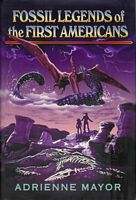 |
| The Lost Way of Stones | ¯¯¯¯¯¯¯ United
States The Lost Way of Stones is one of the website projects of Joel Weishaus. Weishaus is a writer, literary artist and sculptor, art and literary critic, and editor, as well as Visiting Faculty in Portland State University's Department of English; Portland, Oregon. Over the past thirty years, Weishaus has published books, poems, and essays, along with exhibiting his literary texts in museums. He also reviews poetry and poetics for several newspapers and journals. His online work is hosted by three universities. Among many articles and books, Weishaus wrote the Introduction and Notes for Thomas Merton's, Woods, Shore, Desert. Weishaus' most recent book, The Healing Spirit of Haiku, was co-authored with Jungian psychiatrist, David H. Rosen, McMillan Professor of Analytical Psychology and Professor of Psychiatry & Behavioral Science at Texas A&M University. Here are a few quotations from The Lost Way of Stones which Weishaus uses as a portal to muse on Palaeolithic peoples and times: "The
Lost Way of Stones is built around indigenous rock art
found in Southern California, including that of the Chumash Indians who
lived mainly along the Santa Barbara Channel; and art made by
Shoshonean peoples that is located on the Naval Air Weapons Station,
near Death Valley, CA., where, contrasting human creativity with its
destructive shadow, it is 'one of the most spectacular concentrations
of rock art sites in North America.'" "My interest in Amerindian rock art began during a residency at the University of New Mexico's Center for Southwest Research. Cataloging slides of rock art of American Southwest also whet my interest in Aurignacian cave art." "Archaeologist Paul Bahn writes that 'it was the process of journeying to a location and leaving an image there which counted, rather than the image itself, its appearance, degree of completeness, or durability.' However, I would argue that journey and images are entangled in an uncanny web of continuity." "Christine Finn wrote that 'a poetic interpretation of archaeology—and by that I mean one that moves into the metaphysical to consider the essence of a "thing"—should be included in the armory of interpretative tools available to the archaeologist.'" "No matter where we are or when, 'a whole mythology is deposited in our language,' recalling our past as present in the depths of a collective imagination." Website:Rain Taxi 2010 interview: |
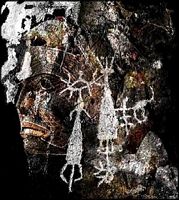 Example of Weishaus' superimposition imagery from The Lost Way of Stones the text of which consists of many layers of quotations (or quotes within quotes) to create a similar 'palimpsest' effect only in a literary medium. |
| Luann Udell | ¯¯¯¯¯¯¯ United States Luann Udell is a nationally-exhibited artist and writer with a B.A. in art history and an M.A. in education. Her article in Pleistocene Coalition News #9 tells the intriguing story of how she went from the young dream of being an artist to art history and academia and then back to the dream of being an artist again only this time it struck the chord after being inspired by slide projections of Lascaux Cave. "A girl can dream, and so I did. If there was no place in art history for me, then I would invent one. I'd start with Lascaux, move on to ancient Egypt and then maybe hit the Bayeux tapestry. But it didn't happen that way. I began with the Lascaux Cave ... and never left. I had no idea I was entering a whole new life, one filled with imagination, story telling and passion." -Stories from the cave Website: Articles in PC News: -
Stories
from the cave (Issue
9)
|
|
| Tom Baldwin | ¯¯¯¯¯¯¯ United States Tom Baldwin is an award-winning author, educator, and amateur archaeologist living in Utah. He has also worked as a successful newspaper columnist. Baldwin has been actively involved with the Friends of Calico (maintaining the controversial Early Man Site in Barstow, California) since the early days when famed anthropologist Louis Leakey was the site's excavation Director. Calico is the only site in the Western Hemisphere which was excavated by Leakey. Baldwin's recent book, The Evening and the Morning, is an entertaining fictional story based on the true story of Calico Early Man Site. Along with Ice Age adventure stretching from Central Asia to North America, the book touches on many levels including Native American mysticism and a "critical look at the scientific establishment." The setting takes place in two time periods simultaneously, the modern day and a much earlier age 185,000 years ago. Along with Virginia Steen-McIntyre and David Campbell, Baldwin is one of the core editors of Pleistocene Coalition News. Articles in PC News: -
Lake
Manix The dried
lake bed of Pleistocene-age
Lake Manix in California; Photograph by Tom Baldwin (Issue 3)
- Reassessing American archaeology: The legacy of Professor George F. Carter (Issue 12) - Breaking the Clovis barrier (Issue 16) - Paleo-camera at home (Issue 18) - Calico Early Man Site: Layers and reminiscences, a 4-decade personal history (Issue 21) - The Pleistocene's most well-traveled creature (Issue 24) - Observations on the Paleoamerican Odyssey Conference, Santa Fe, 2013 (Issue 26) - A celebratory dance (Issue 27) - Nature doesn't make artifacts! (Issue 27) - Forgotten heroes of archaeology series: Dr. George Francis Carter, 1912-2004 (Issue 30) - Dee Simpson and Louis Leakey and the beginnings of the Calico Early Man Site (Issue 31) - Louis Leakey's view on indigenous languages and age of the earliest Americans (Issue 31) - On the way to Calico's 50th (Issue 32) - Dee Simpson's story on the start-up of Calico (Issue 32) - The first artist: Comparing Blombos with an artifact dated half a million years older (Issue 33) - The art of hunting (Issue 33) - Denisovan bracelet: Advanced technological skills in early human groups is still resisted (Issue 35) - "To be or not to be?" That is the question. (Issue 35) - Let's take another look at Bilzingsleben (Issue 36) - Early man and the sea (Issue 37) - Upcoming Calico report (Issue 41) - 16,000-year old artifacts discovered at Gault site, Texas (Issue 42) - A nostalgic return to Calico (Issue 42) - Those pesky Denisovans (Issue 43) - The romance and prehistory of Lake Manix (Issue 46) - Comment on the March 8, 2017 Issue of Nature regarding Neandertal dentition (Issue 46) - The Pleistocene version of a multi-use tool (Issue 47) - Note on amateur group, Friends of Calico, that preserved Calico Early Man Site before denigration by money-hungry 'professionals' (Issue 49) - Update and review of 'modern level' Denisovan culture c. 40-50,000 years ago (Issue 50) - Is it an artifact? (Issue 51) - Member news: Calico Early Man Site YouTube tour and links to PCN Calico articles (Issue 52) - PCN relevant reprint series: The first artist: Comparing Blombos with an artifact dated half a million years older (Issue 52) - Dissussion with Jim Harrod, PhD, about the Berekhat Ram object and H. erectus engravings from Trinil, Indonesia (Issue 53) - The Lost and Found Department: The importance of bringing fresh eyes to buried-away archaeological evidence (Issue 55) - Scientific implications of the 500,000-year old Indonesian engraved shell (Issue 56) - Human compassion and empathy: How far back do they go? (Issue 57) - Proposing a Pleistocene habitation gap in the Americas (Issue 58) - Denisova Cave, Siberia: Art, craftsmanship, and telling DNA (Issue 60) - Denisovan news: Keeping these remarkable though enigmatic people up front (Issue 62) - Early man and multi-use tools (Issue 64) - Compelling new evidence Neanderthals were smarter than you think (Issue 65) - Tom Baldwin's new report on the humanity of Neanderthals [added note by Layout editor] (Issue 65)5) - 8 proofs the 'ships not seen' effect causes scientific error in anthropology, biology, and paleontology Compilation of observations by Tom Baldwin, Richard Dullum, John Feliks and Dr. Virginia Steen-McIntyre (Issue 65) - Religion and art in mankind (Issue 67) - The fittest creatures, the innovators, the survivors - not necessarily the same (Issue 70) - The fittest creatures, the innovators, the survivors - not necessarily the same, Part 2: Humanity, religion, evidence (Issue 71) - Calico Early Man Site - a personal journey (Issue 72) - Paleolithic 'outsider art' - Children arranging imprints (Issue 73) - What makes archaeology science? (Issue 74) - The pros & cons of a natural Paleolithic remedy for intestinal parasites (Issue 75) - REPRINT: Breaking the Clovis barrier [Reprint Issue #23] (Issue 75) - Some thoughts on Upper Paleolithic female depictions (Issue 76) - Changing views of early man (Issue 77) - The value of evidence in Paleolithic anthropology -citing Tom Baldwin Homo erectus shell engraving (Issue 78) - Denisovan savants? (Issue 79) - Book review [The Indigenous Paleolithic of the Western Hemisphere by Paulette Steeves] (Issue 80) - Another coffin nail in Clovis' casket (Issue 81) - REPRINT: The Pleistocene's most well-traveled creature [Reprint Issue #24] (Issue 82) - The Pleistocene's most well-traveled creature: Taking another look [Revised from Issue #82] (Issue 84) - What does it take to be considered "human"? Excitement and caution regarding Rising Star Cave (Issue 85) - Reflections on the Bering Land Bridge megafauna superhighway (Issue 87) |
 |
| Louis Leakey 1970 Calico talk | ¯¯¯¯¯¯¯ United States - Reviving the Calico of Louis Leakey, part 3: Audio clips from Leakey's 1970 Calico talk (Issue 39) NOTE TO READERS: Depending upon your computer configuration the Leakey audio clips may not play back while the PCN issue is viewed online. In such a case, simply download the issue (PDF file) to your desktop, and hopefully the clips will then play back. |
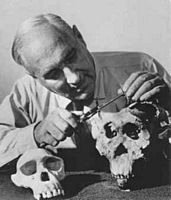 |
| Michael Winkler | ¯¯¯¯¯¯¯ United States Michael Winkler is a palaeolithic theorist and conceptual installation artist. In addition to being featured in art journals such as Rampike Magazine and in books such as Imagining Language (Rasula & McCaffery, MIT Press, 1998), Winkler's work is also part of the permanent collections in various art and literary institutions in the U.S. and abroad such as the Museum of Contemporary Art, Chicago; the Library of The Museum of Modern Art, New York; the Hans Sohm Archive at the Staatsgalerie, Stuttgart, Germany; the King Stephen Museum, Hungary; and the National Institute of Design, in India. Recent exhibitions include: Alignments, an installation at Galeria AT, Academy of Fine Art, Poznan, Poland; a large-scale wall installation in Poetic Positions at the Kassel Art Museum in Germany; and a 20-year survey at the Rosenwald Gallery, Van Pelt-Dietrich Center, University of Pennsylvania (image lower right). On Imagining Language: "What Rasula and McCaffery have accomplished is to put together an astonishing and unprecedented assemblage of the multiple ways in which language has been used or been conceptualized in relation to reality. Imagining Language is a continuous revelation." -Jerome Rothenberg, Professor of Visual Arts and Literature, University of California, San Diego Website and upcoming new books: Articles in PC News: - Ancient
art and modern language (Issue 5)
- Proportional acuity - mathematics of the ancient mind (Issue 10) |
 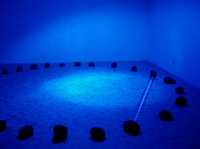 |
| Anarchaeology | ¯¯¯¯¯¯¯ United States David Campbell is an author/historian and an investigator of geological or manmade altered stone anomalies or large natural structures which may have been used by early Americans. He also has a working knowledge of various issues regarding the peopling of the Americas. Along with Virginia Steen-McIntyre and Tom Baldwin, Campbell is one of the core editors of Pleistocene Coalition News. Website: Articles in PC News: -
Anomalies: An example of
'palaeo-smarts 350,000 years ago, by
Ishtar Babilu Dingir and David Campbell (Issue 1)
- A case of the 'limited hangout', by David Campbell (Issue 2) - Solutrean Solutions: Goodman's American Genesis ahead of the game, (Issue 19) - Heads up on the Trinity (the Malakoff heads) (Issue 20) - Old North Texas sites revisited) (Issue 26) - Forgotten heroes of archaeology series: Emma Lou Davis, Mojave maverick, 1905-1988 (Issue 31) - A stone carpet twixt seas of sand (Issue 36) - Forgotten heroes of archaeology series: Cyrus the Great: Cyrus Newton Ray 1880-1966 (Issue 37) - The Brownwood Skull (Issue 38) - Gobekli legacy (Issue 41) - Regarding postscript to Gimbutas (Issue 43) - Paleolithic Polyphemus: A review (Issue 45) - The levee breaks (Issue 47) - Up from 'arrahead' hunter (Issue 49) - Familiarity breeds content (Issue 50) - PCN perspectives on the "First Sculpture: Handaxe to Figure Stone" exhibit in Dallas, Texas (Issue 51) - Walking in Nasher (Issue 52) - EXCERPT from: The levee breaks [Issue 47] (Issue 66) |
|
| Raghubir S. Thakur |
¯¯¯¯¯¯¯ India Captain Raghubir S. Thakur (June 1948 - November 2020), MA History, was
an ex-Army officer (Gazetted) with his last role being Consultant for
Security and Land Management for the Archaeological Survey of India
under the Ministry of Culture and Tourism, Government of India. His
responsibilities included
protecting National Government-listed Heritage properties including
World Heritage monuments. The Security Cell was formulated and created
by Thakur’s persuasion of every Director General of the ASI for over 19
years. Over the years, Thakur gained a broad knowledge of rock art
sites in the region being first to discover and document rock art in
Delhi. Thakur participated in 10 international archaeological and
environmental conferences (1990–2012) presenting papers in India,
Sweden, and Japan. He was Organizing Sec. of the Asian Conference on Air Pollution
(1999). Thakur’s most recent presentation was at the Joint Annual
Conference of IAS, ISPQS, and IHCS (2015). Among others, Thakur is
associated with the discovery of an Upper Paleolithic site near Ellora
Caves (1992), megalithic menhirs Western Rajasthan (1997), cup-marks
Siroli Dongari/Chhattisgarh (2007), and nearly 100 cup-mark/petroglyph
sites Delhi-Aravallis mountain range (2013–15). Articles in PC News: - Petroglyphs in Delhi-Aravallis-System, India: Vivid creations by early man, an introduction (Issue 39) - Petroglyphs in Delhi-Aravallis-System, India: Vivid creations by early man, Part 2 (Issue 40) - Megaliths in Delhi-Aravallis-System, India: Part 3 of the Delhi-Aravallis series (Issue 41) - Animal petroglyphs in Delhi-Aravallis-System, India: Part 4 of the Delhi-Aravallis series (Issue 43) - Mathematical rock art in old world India: In special context to Jawaharlal Nehru University campus, Part 1: Complex cup-mark pairs (Issue 67) - Mathematical rock art in old world India: In special context to Jawaharlal Nehru University campus, Part 2: Game boards and beyond (Issue 68) - Mathematical rock art in old world India: In special context to Jawaharlal Nehru University campus, Part 3: Cup-marks & pentagrams (Issue 69) - Mathematical rock art in old world India: In special context to Jawaharlal Nehru University campus, Part 4: Diagonals & polygons (Issue 70) - Mathematical rock art in old world India: In special context to Jawaharlal Nehru University campus, Part 5: Animal associations and Conclusion (Issue 71) Articles about Raghubir S. Thakur by other PCN authors : - Ancient American and Indian petroglyphic encyclopedias [regarding the work of Urbaniak, Willis and Thakur] John Feliks (Issue 68) - Raghubir Singh Thakur (June 1948 - November 2020) Sachin K. Tiwary (Issue 69) - Mnemonic devices trump entoptic hallucinations: Lukasa memory boards [regarding the work of Urbaniak, Willis and Thakur] John Feliks (Issue 69) - Nine Men's Morris - Thakur's 'game boards' - which came first? John Feliks (Issue 70) |
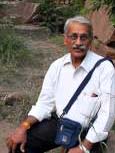 |
| Dragos Gheorghiu | ¯¯¯¯¯¯¯ Romania
Dragos Gheorghiu is an experimental archaeologist, artist, pyro-technics expert, and professor of cultural anthropology and prehistoric art at National University of Arts, Bucharest, Romania. For many years, Gheorghiu has attempted to tackle the difficult subject of understanding the spirituality of prehistoric people through experimental archaeology. His work involves such universal and timeless experiences as human perceptions of landscape and the shared experience of fire, to name only two. Gheorghiu's Timemaps project on YouTube involves creating unadorned film representations of prehistoric or later early technologies by discovering little known living communities and giving them a presence on the Internet. The films are done in a style that gives a sense of real time in daily life without the embellishments or editing styles of other types of filmmaking. The project also involves creating virtual museums for these communities to help reconstruct their past and in the hopes that local traditions can be preserved. Photo at upper right is a still from, "Vertical Loom," one of the films conceived by Gheorghiu and filmed by Adrian Serbanescu. Performance and design of the loom and costume is by Alexandra Rusu. The loom propmaker is Ion Dimcea. Gheorghiu’s "Landart Transformations" is a project at Monte Velho, Portugal; photo by Radu Damian at lower right. It is a visual representation of a prehistoric hill fort or castro. The idea is in part to help observers from a distance get an actual sense of place in three dimensions. Gheorghiu is the author, editor, and co-editor of many articles and books on archaic technologies as well as the signs and symbols of material culture. He has done pioneering research in the field of cognitive archaeology, including prehistoric spirituality, not only by recreating artifacts and using ancient techniques, but also by re-enacting the use of space, water and fire as in ancient times. All of these experimental archaeology programs are attempts to reproduce perceptions common to all people and to help create a more direct connection to the past. Websites and articles featuring the work of Dragos Gheorghiu: Timemaps (unadorned mood films by D.Gheorghiu and A.Serbanescu to give a sense of varioius early technologies in real time)
Dragos Gheorghiu represents Balkan archaeology at UK TAG 2010 (Archaeologists as artists) Project Vadastra (reconstruction and traditional symbolic burning of a mud hut) Articles in PC News featuring Gheorghiu's work: - Artchaeology: A sensorial approach to the materiality of the past, By Dragos Gheorghiu, book review by Virginia Steen-McIntyre (Issue 5)
- Landart transformations at Monte Velho, overview (Issue 16) - Launching the gallery, also features overview of Gheorghiu's Landart Transformations (Issue 20)
- New book by Dragos Gheorghiu and Paul Bouissac (Issue 34) - Experiencing a prehistoric ritual -by Dragos Gheorghiu (Issue 40) - Göbekli Tepe: A hunter-gatherers' architectural world map -by Dragos Gheorghiu (Issue 41) - Recent archaeological land art project at Vadastra Romania (Issue 43) - Eyed tools: A short contribution to Aurignacian art and imagination (Issue 53) - Update on latest projects (Issue 59) - Experimenting prehistoric art: Animated sounds, colors and flames (Issue 71) - Dragos Gheorghiu, PhD, sends news of his recent article citing PCN (Issue 75) |
  |
| Ray Urbaniak |
¯¯¯¯¯¯¯ United States Ray Urbaniak is an engineer by education and profession; however, he is an artist and passionate amateur archeologist at heart with many years of systematic field research on Native American rock art, especially as related to archaeoastronomy, equinoxes and solstices in Utah. He has noted that standard archaeological studies commonly record details of material culture but overlook the sometimes incredible celestial archeological evidence. Urbaniak has also played a major role in documenting and raising concerns for the accelerating vandalism, destruction and theft of Native American rock art. He has brought state representatives to rock art sites with the hope of at least placing labels as protected nearby what he calls “sacred art” sites as a deterrent to vandalism. Urbaniak’s book, Anasazi of Southwest Utah: The Dance of Light and Shadow (2006), is a collection of color photographs of previously unrecorded Anasazi or Ancestral Pueblo solstice markers, equinox and cross-quarter markers in SW Utah including both petroglyph and horizon markers as well as the first general guidelines for identifying solstice and equinox markers. His rock art photographs include clear descriptionswith many photographs being time-sequenced as events occurred along with compass, angular orientations, and other information. Website: - Ice Age animals in Southwest U.S. rock art, Part 3 (Issue 24)
- More on Ice Age animals in Southwest U.S. rock art (Issue 26) - Intriguing images from the Shaman's Gallery and possible conclusions, Part 1 (Issue 32) - Intriguing images from the Shaman's Gallery and possible conclusions, Part 2 (Issue 32) - Ice Age animals in Southwest USA rock art: More on their identification and protection (Issue 34) - Minor detail from Utah rock panel with a proposed mammoth hunting scene (Issue 37) - More on a Utah rock art panel with a proposed mammoth hunting scene (Issue 38) - Ice Age animals in SW USA rock art, continued: Another potential mammoth image (Issue 41) - Mammoth sightings and rock art depictions could be more recent, Part 1 (Issue 43) - Oral tradition and beyond (Issue 47) - Ice Age animal descriptions passed down through oral tradition (Issue 48) - Oral tradition and beyond, Part 2 (Issue 49) - Dating a remarkable petroglyph site through visual clues (Issue 50) - Earliest maize depicted in southern Utah petroglyph (Issue 51) - Reassessing the Clovis people and their artistic capabilities, a preview (Issue 51) - Refined thinking regarding Ice Age animals in rock art (Issue 52) - Earliest maize depicted in southern Utah petroglyph, Part 2: Antiquity-corroborating images (Issue 52) - Refined thinking regarding Ice Age animals in rock art, Part 2 (Issue 53) - The giant bear and other megafauna and oral tradition (Issue 53) - The Pleiades 1600 BC (Issue 54) - Some observations on the controversial subject of the peopling of the Americas (As the old expression goes, "I don't have a horse in this race" (Issue 54) - Falcons and falconry in Southwest U.S. rock art (Issue 55) - Three-horned animals on a Utah rock art panel (Issue 55) - Asterisk sign c. 16,000 BP and solstice markers (Issue 56) - Experimental archaeology and Paleolithic-style hand stencils (Issue 56) - Rock art rebels - breaking with tradition (Issue 57) - Three-horned animal depictions, follow-up (Issue 57) - Fascinating similarities in the rock art of Australia and the Arizona Strip (Issue 58) - Reconsidering Paleolithic and other depictions and how knowledge is transmitted over time (Issue 58) - Rarely-depicted Ice Age animals in U.S. cave art (Issue 59) - Intriguing figures in Southwest U.S. rock art (Issue 59) - Tattoos as Clovis / Folsom-age portable "rock art" (Issue 60) - Possible steppe bison petroglyph, Moab, Utah (Issue 60) - Older artifacts curated by Paleolithic people (Issue 61) - Updates on proboscidea, step bison, and tattoos (Issue 61) - Sequel to Pleiades articles (Issue 61) - Giant ground sloths and rethinking the life expectancy of pictographs (Issue 62) - Dissecting a woolly mammoth petroglyph image (Issue 62) - Nevada 'moose' and mammoth petroglyphs and a note about persistent mainstream skepticism (Issue 63) - 'Twisted perspective' in rock art (Issue 63) - Elaborated documentation of the mammoth/notation panel (Issue 64) - Another possibility regarding hand stencils in France (Issue 64) - Possible locations of Pleistocene rock art in North America (Issue 64) - Analysis of an intriguing micro-petroglyph in Utah (Issue 65) - Ships-not-seen and fact-denying dilemmas in Clovis-First and other mainstream beliefs (Issue 65) - Mammoth/notation panel update, second mammoth, and interactive online 3D projection (Issue 66) - A possible Pleistocene-age pictograph site in the Arizona Strip (Issue 66) - Accelerated extinction of the proboscideans due to hunting of young animals (Issue 67) - More observations on the controversial subject of the peopling of the America (Issue 67) - Ancient American and Indian petroglyphic encyclopedias [reg. the work of Ray Urbaniak, Mark Willis and Raghubir S Thakur] (Issue 68) - Possible woolly rhinoceros pictograph (Issue 68) - When the scientific method becomes unscientific (Issue 68) - Surprising affinities between rock art animal images around the world (Issue 68) - Winter solstice follow-up to 'Analysis of an intriguing micro-petroglyph in Utah (Issue 69) - Gomphothere pictograph (Issue 69) - An open mind [excerpts from Ray Urbaniak letter regarding the Pleistocene Coalition] (Issue 70) - Camelops and possible rock art footprint symbols (Issue 70) - American cheetah (Issue 71) - What to make of mainstream Clovis/Folsom dates? (Issue 71) - The Pleiades rock art saga: New evidence and implications (Issue 72) - Support for proposed ibex depictions in U.S. rock art and mammoth tusks depicted as large horns (Issue 72) - Saudi panel - Part 2 of the Pleiades rock art saga By Ray Urbaniak and Abdulrahman Albalawi (Issue 73) - Camelid rock art in the Grand Canyon (Issue 73) - Ice Age animals in Utah, Arizona, and Nevada rock art: Game-changing Native American pictographs and petroglyphs (Issue 74) - The Pleiades rock art saga continues By Ray Urbaniak and Abdulrahman Albalawi (Issue 75) - A summary of Ice Age animal depictions in U.S. rock art (plus megafauna and humans in the Americas) (Issue 75) - Pleiades saga: Alternative orientations of the Saudi Arabian and Moroccan glyphs, Ray Urbaniak and Abdulrahman Albalawi (Issue 76) - The Pleiades rock art enigma and its growing international context, Ray Urbaniak and Juan Crocco (Issue 77) - Analysis of a very old and unique petroglyph: Timeless animal behavior depicted in rock art, Ray Urbaniak (Issue 78) - Ireland petroglyphs: Further support for a nova in the Pleiades, Ray Urbaniak, Abdulrahman Albalawi and Juan Crocco (Issue 78) - The Thunderbird, Ray Urbaniak, Abdulrahman Albalawi and Juan Crocco (Issue 79) - Possible giant ground sloth pictograph, Ray Urbaniak, Abdulrahman Albalawi and Juan Crocco (Issue 79) - Ice Age animals in Utah, Arizona, and Nevada rock art: Game-changing Native American pictographs and petroglyphs, Part 1 [REPRINT from Issue 74] (Issue 80) - Ice Age animals in Utah, Arizona, and Nevada rock art: Game-changing Native American pictographs and petroglyphs, Part 2 (Issue 80) - Another thought on Clovis caches and migration (Issue 81) - Ice Age animals in rock art: Ranges and extinctions (Issue 82) - A new extinct pronghorn pictograph—Grand Canyon (Issue 83) - Regarding Chauvet Cave images (Issue 83) - Modern-era steppe bison, giant sloths and ibex (Issue 84) - Evaluation of a 1964 paper on an ibex skull from Iowa (Issue 85) - Case for a worldwide early written language (Issue 85) - Unusual horns may indicate a new species of pronghorn (Issue 86) - More enigmatic rock art from the Grand Canyon and Winslow, AZ (Issue 86) - Comparing sizes of proposed dwarf pronghorn and jack rabbit depictions (Issue 87) Articles about Ray Urbaniak by other PCN authors: - Ancient American and Indian petroglyphic encyclopedias John Feliks (Issue 68) - Rock art photographer Jennifer Hatcher apparent Saiga antelope rock art pics sent to Ray Urbaniak John Feliks (Issue 69) - Clovis effigies publication held up for 12 years [regarding the work of Mark Corbit, Virginia Steen-McIntyre, Ray Urbaniak, and many others] John Feliks (Issue 69) - Carl Sagan unwittingly equated anthropology with politics and religion [Reprint of Intro from Issue #30 with 2022 Addendum citing Ray Urbaniak] John Feliks (Issue 75) News items Ray Urbaniak: -Recommended article: Aboriginal memories of inundation of the Australian coast dating from more than 7000 years ago (Issue 44)
-Recommended articles: Articles providing more evidence of oral histories passed down across millennia (Issue 45) Fiction by Ray Urbaniak overview: |
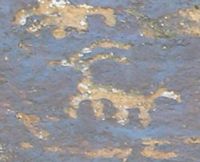 |
| Jeffrey Goodman, PhD | ¯¯¯¯¯¯¯ United States Jeffrey Goodman, PhD, is an archaeologist, geologist, and professional (Geological) mining engineer. He has a professional degree in Geological Engineering from Colorado School of Mines, an MA in anthropology from the University of Arizona, an MBA from Columbia University Graduate School of Business, and a PhD in anthropology from California Coast University. For nearly 10 years, Goodman was accredited by the former Society of Professional Archaeologists (SOPA) 1978–1987. In the summer of 1979, Goodman's
archaeological team directed by the late Dr. Alan Bryan, Professor of
Archaeology, University of Alberta, discovered a flat stone with
straight lines engraved on both sides. It was brought up from
Pleistocene deposits at a depth of 23 feet at Goodman's archaeological site in the mountains north of Flagstaff, Arizona. Goodman had been excavating the site intermittently since 1973. The complete decades-long story of this remarkable artifact, including the dating methods applied and never-before-published photographs of the excavation and participants, can be found in the following articles in Pleistocene Coalition News. - The Flagstaff Stone: A Paleo-Indian engraved stone from Flagstaff, Arizona (Issue 11)
- Solutrean solutions—Goodman’s American Genesis ahead of the game, by David Campbell (Issue 19) - Update on Jeff Goodman's Flagstaff Stone (Issue 28) - Resolving the mystery of the Flagstaff Stone: a call for help (Issue 29) - The potential o f the Flagstaff Stone in the search for early man in the Americas (Issue 31) - The Flagstaff Stone: New dating results (Issue 37) - Engraved stone found in New world glacial paleosol: The Flagstaff Stone offers profound information on the age and intellect of early man in the Americas, Part 1 - Engraved stone found in New world glacial paleosol, Part 2 - Engraved stone found in New world glacial paleosol, Part 3 - Flagstaff Stone supplemental section: Primary figures from Dr. Allaz’ Flagstaff Stone electron microprobe scans - You can't get there from here: The true story of the Flagstaff Stone, Part 1 (Issue 55) - You can't get there from here: The true story of the Flagstaff Stone, Part 2 (Issue 55) - You can't get there from here: The true story of the Flagstaff Stone, Part 3 (Issue 55) |
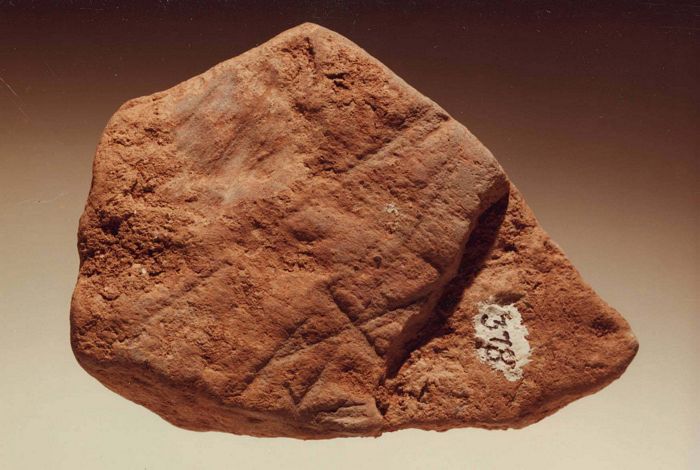 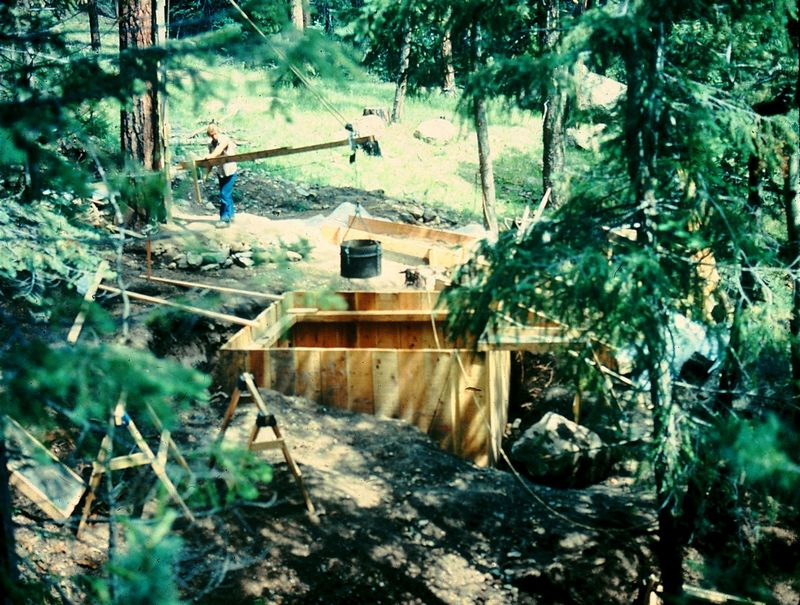 |
| Jan Willem van der Drift | ¯¯¯¯¯¯¯ The Netherlands Van der Drift (stone tool production expert) Jan Willem van der Drift, a veterinarian in the Netherlands by trade, is a colleague of the late Chris Hardaker, archaeologist and founding member of the Pleistocene Coalition. He is a Dutch lithics expert in stone tool production with over 40 years field experience. Van der Drift is a prolific author in both English and Dutch publishing in such as Notae Praehistoricae, Archeologie, APAN/Extern (publication of Aktieve Praktijk Archeologie Nederland), etc. He is also a producer of educational films demonstrating bipolar techniques of stone tool production and its association with various human cultures of all periods beginning with the Paleolithic. Van der Drift’s work is also referenced in Paul Douglas Campbell’s book, The Universal Tool Kit (2013), a highly-rated overview of stone tool production techniques. Van der Drift is presently Chairman of APAN or Active Practitioners of Archaeology in the Netherlands (Aktieve Praktijk Archeologie Nederland). The organization was started due to the cumulative knowledge and field experience of its members consistently observing inaccurate interpretations of physical evidence regarding the nature of early humans by the mainstream archaeology community. The group was given extra motivation along these lines by Chris Hardaker who, in correspondence with van der Drift related the treatment of Calico Early Man Site in California (excavated by famed anthropologist Dr. Louis Leakey) by the mainstream archaeological establishment. Van der Drift lives in the small town of Cadier en Keer in the province of Lumborg, Netherlands. Website: http://apanarcheo.nl How our ancestors lived SERIES - Part 1: Neanderthals, Homo sapiens and the crucial role of huts (Issue 64)- Part 2: The invention of stone tools (Issue 65) - Part 3: How the handaxe was invented (Issue 66) - Part 4: Bipolar multitools (Issue 67) - Part 5: Mode-III: traveling light (Issue 68) - Part 6: Six stages of human behavior (Issue 69) - The pioneers of Calico (Issue 72) | |
| Guy Leduc |
¯¯¯¯¯¯¯ Canada, France Guy Leduc is a Canadian geological engineer specializing in tectonics, geomorphology, and sequence stratigraphy. He is also a longtime researcher in paleontology, achaeostronomy, mythology and linguistics. Leduc is presently living in France. Articles in PC News:- Catastrophic subglacial flood at the end of the last Ice Age (Issue 57) - Challenging plate tectonics theory (Issue 58) - The paradox of ancient seashores and landscapes (Issue 59) - Blind spots in earth science research (Issue 67) - Hyperbaric atmosphere botanic (Issue 70) | |
| Richard Michael Gramly, PhD | ¯¯¯¯¯¯¯ United States Richard Michael Gramly, PhD, is an archaeologist with a BS in geology (Rensselaer Polytechnic Institute) and a PhD in anthropology (Harvard University). He has conducted archaeological and geological fieldwork in six countries and 30 states. His PhD dissertation (1975) focused on Kenyan and Tanzanian prehistory. Dr. Gramly worked for six years in East Africa two years of which he was an Exhibits Planner at the National Museum of Kenya, Nairobi, under famed anthropologist Richard Leakey, being well-acquainted with the entire Leakey family. Articles in PC News: - Presumed evidence of Clovis industry at Harvard Hill, San Bernardino County, California (Issue 60) - Lighting, heating, and cooking during the Late Pleistocene in both the Old and New Worlds Michael Gramly and Dennis Vesper (Issue 63) - Understanding the Clovis-age lamp preform from the Cedar Fork Creek site, north-central Ohio (Issue 66) - BOOK REVIEW: Archaeology of North Central Ohio, Volume 3, (2020) (Issue 67) - Publication announcements new paper, new book w-contributions PC co-founder Dr. James B. Harrod (Issue 70) - A Palaeo-American stone figurine from the Calico Hills, San Bernardino County, California (Issue 71) - Preface to upcoming essays about ivory, proboscidean bone, and extinct/extirpated cervid antler artifacts from Clovis-age sites (Issue 72) - Ice Age industry: Essay 1 - A focus on stone tools (Issue 73) - Ice Age industry: Essay 2 - Focus upon artifacts made of bone (Issue 74) - Ice Age industry: Essay 3 - Focus upon artifacts made of ivory (Issue 75) - Ice Age industry: Essay 4 - Focus upon artifacts made of antler (Issue 76) - Ice Age industry: Essay 5 - Palaeolithic Clovis ritual behaviors and accessing the underworld (Issue 77) - Quick summary of new book, "Human and Proboscidean Interactions in Northern North America" (Issue 77) - Oldest absolutely-dated sled in the world (Issue 80) - A recent discovery at the Pioneer Museum, Lower Blue Licks, Kentucky (Issue 85) - Promo for presentation on dating of the oldest absolutely-dated sled (Issue 87) | |
| Anthony L. Peratt, PhD, and W.F. Yao, LMS, M.A. | ¯¯¯¯¯¯¯ United States Anthony Lee Peratt, PhD, received his BSEE from California State Polytechnic University, 1963, followed by his MSEE from the University of Southern California, 1967. Assigned for two years to Professor Hannes Alfven, Peratt translated Alfven’s seminal book, Cosmic Plasma, into English. Peratt received his PhD in 1971, after Alfven was awarded the Nobel Prize in Physics. Peratt then joined the UC National Laboratories (Lawrence Livermore in 1972 and Los Alamos in 1981), receiving his 30-year UC Alumnus Award in 2005. He spent sabbaticals at the Max Planck Institute for Plasma Physics, Garching, Germany 1975–77 and the Royal Institute of Technology, Stockholm, Sweden 1985/1988. In 1986, he gave the prestigious Norwegian Academy of Science and Letters Birkeland Lecture. Dr. Peratt later received two U.S. Department of Energy (DOE) awards for his experiments and computations. With Professor Oscar Buneman, Stanford University (of Bletchley Park fame) Peratt ran the Tridimensional-Stanford fully-3D gravitational and plasma teraflop galaxy code for 14 years in a Stanford-Los Alamos collaboration. 1995–99 Dr. Peratt served in the Department of Energy Defense Programs and as Acting Head of Nuclear Nonproliferation. Since then, he served in the Los Alamos Associate Laboratory Directorate for Experiments and Computations. Subsequently his research involves the source of petroglyphs as an ancient above-Antarctic intense outburst, with ground GPS measurements and their distribution-orientation with earth-orbiting satellites, in the Americas; Australia, Polynesia (including Easter Island), the Alps and Mongolia. 2004–2011 Peratt worked with UPenn Department of Archaeology and Anthropology. Dr. Peratt is Senior Editor of the IEEE Transactions on Plasma Science and an IEEE Life Fellow, a member of the American Physical Society, American Astrophysical Society, and Archimedes Circle. He acknowledges his tenure at the U.S. Department of Energy, Washington D.C., 1995–2000, Department of Defense Programs (DP) and Nuclear Nonproliferation (NN). Dr. Peratt is indebted to Professors Hans Kuehl, EE Department USC and Zohrab Kaprelian, Dean of Engineering USC, who started him on a course of studies he could not have foreseen. Website: plasmauniverse.info Articles in PC News: - The Pillars of Heracles (Pillars of Hercules), Part 1 Anthony Peratt (Issue 63) - The Pillars of Heracles (Pillars of Hercules), Part 2 Anthony Peratt (Issue 63) - Pleistocene civilizations, Part 1 Anthony Peratt and W. F. Yao (Issue 82) - Pleistocene civilizations, Part 2 Anthony Peratt and W. F. Yao (Issue 83) - Pleistocene civilizations, Part 3 Anthony Peratt and W. F. Yao (Issue 84) - Pleistocene civilizations, Part 4 Anthony Peratt and W. F. Yao (Issue 85) - Pleistocene civilizations, Part 5 Anthony Peratt and W. F. Yao (Issue 86) - Pleistocene civilizations, Part 6 Anthony Peratt and W. F. Yao (Issue 87) PCN article w/photo & brief discussion of Peratt's work: - Intriguing images from the Shaman's Gallery and some possible conclusions, Part 2 by Ray Urbaniak (Issue 32) PCN 'Member news and other info' comment from Dr. Peratt: - News item note from Dr. Peratt regarding archaeological artifacts having their chronological dates unintentionally "reset" to zero due to nuclear testing (Issue 34) PCN 'Member news and other info' support comment: - Comment regarding, "International experts respond to California's BLM/big business threats to Calico Early Man Site," by John Feliks (Issue 72) | |

|
|
The links in this section are to a few early PCN articles, artwork, or news items by certain authors. It is 'not' a list of Pleistocene Coalition members or PCN subscribers.
|
|
- Pleistocene Coalition News -
 #1 October 2009 Debut Patrick Lyons Virginia Steen-McIntyre David Campbell Ishtar Babilu Dingir Alan Cannell John Feliks |
 #2 November-December 2009 Jörn Greve Gerhard Neuhäuser Lutz Fiedler Peter Faris Patrick Lyons Beth McCormack David Campbell Laura Lyons Virginia Steen-McIntyre Ishtar Babilu Dingir |
 #3 January-February 2010 Carl L. Johannessen Richard Dullum Tom Baldwin Jim Harrod Alan Cannell Virginia Steen-McIntyre Ishtar Babilu Dingir John Feliks |
 #4 March-April 2010 Sam VanLandingham Michael A. Cremo Jörn Greve Gerhard Neuhäuser Virginia Steen-McIntyre Alan Cannell Peter Faris Richard Dullum |

#5 May-June 2010 Michael Winkler Matt Gatton Ed Gutentag Alan Cannell Lutz Fiedler Virginia Steen-McIntyre John Feliks |
 #6 July-August 2010 Alan Cannell Sam VanLandingham Matt Gatton Jörn Greve Gerhard Neuhäuser Chris Hardaker Ishtar Babilu Dinger Virginia Steen-McIntyre |
 #7 September-October 2010 1st Anniversary Issue Paulette Steeves Patrick Lyons Sam VanLandingham Chris Hardaker Alan Cannell Matt Gatton Virginia Steen-McIntyre John Feliks |
 #8 November-December 2010 Ekkehart Malotki Henry Wallace Jim Harrod Ron Alexander Michael A. Cremo Chris Hardaker Alan Cannell Virginia Steen-McIntyre John Feliks |
 #9 Janurary-February 2011 Ren Lallatin Sam VanLandingham Luann Udell Michael Cremo Alan Cannell Kenneth B. Johnston Virginia Steen-McIntyre John Feliks |
||
 #10 March-April 2011 Richard Dullum Alan Cannell Jörn Greve Gerhard Neuhäuser Dave McIntyre Michael Winkler Virginia Steen-McIntyre John Feliks |
 #11 May-June 2011 Jeffrey Goodman Charles W. Naeser Bill Cote Paulette Steeves Sam VanLandingham Virginia Steen-McIntyre John Feliks |
 #12 July-August 2011 Richard Dullum Kevin Lynch Tom Baldwin Michael Cremo Harold E. Malde Ekkehart Malotki Henry D. Wallace Virginia Steen-McIntyre John Feliks |
||
 #13 September-October 2011 (2nd Anniversary Issue) Lutz Fiedler Joe Liddicoat Jim Bischoff Jörn Greve Gerhard Neuhäuser Fred E. Budinger, Jr. Ken Johnston Kyron O'Doherty Richard Dullum Kevin Lynch Virginia Steen-McIntyre John Feliks |
 #14 November-December 2011 Chantal
Jègues-Wolkiewiez |
 #15 January-February 2012 Ursel Benekendorff James B. Harrod Chantal Jègues-Wolkiewiez Alan Cannell Juan Armenta Virginia Steen-McIntyre John Feliks |
||
 #16 March-April 2012 George Howard Paulette Steeves Tom Baldwin Richard Dullum Dragos Gheorghiu Jim Bischoff Virginia Steen-McIntyre John Feliks |
 #17 May-June 2012 Fred E. Budinger, Jr. Vesna Tenodi Rockey Whipkey Helen Banks Ursel Benekendorff Virginia Steen-McIntyre John Feliks |
 #18 July-August 2012 Kevin Lynch Richard Dullum Patricio Bustamante Ricardo Moyano Daniela Bustamante Helen Banks Matt Gatton Leah Carreon Rod Chilton Vesna Tenodi Sam VanLandingham Kristie Cast Baldwin Tom Baldwin John Feliks |
||
 #19 September-October 2012 (3rd Anniversary Issue) David Campbell Jeffrey Goodman Rockey Whipkey Vesna Tenodi Jörn Greve Gerhard Neuhäuser Bill Cote Marshall Payn Paulette Steeves Virginia Steen-McIntire John Feliks |
 #20 November-December 2012 Alan Cannell Trevor McNaughton Sharlet Di Giorgio Gina Sinozich Marina Lapadatovic Tony Mitton David Campbell Michael Winkler Dragos Gheorghiu Vesna Tenodi Donald Johnson Virginia Steen-McIntire John Feliks |
 #21 January-February 2013 Maggie Macnab Tom Baldwin Vesna Tenodi Richard Dullum Virginia Steen-McIntire John Feliks |
||
 #22 March-April 2013 Ray Urbaniak Chris Hardaker Kat Copeland Bonnye Matthews Richard Dullum Kevin Lynch Vesna Tenodi Fred E. Bundiger, Jr. John Feliks |  #23 May-June 2013 Ray Urbaniak Alan Cannell Vesna Tenodi Virginia Steen-McIntyre John Feliks |
 #24 July-August 2013 Tom Baldwin James B. Harrod Chris Hardaker Ray Urbaniak Ed Swanzey Vesna Tenodi Virginia Steen-McIntyre John Feliks | ||
 #25 September-October 2013 (4th Anniversary Issue) David Deming Trevor R. McNaughton Rod Chilton Fred E. Budinger, Jr. Vesna Tenodi John Feliks |
 #26 November-December 2013 David Campbell Tom Baldwin Chris Hardaker Jörn Greve Gerhard Neuhäuser Ray Urbaniak Fred E. Budinger, Jr. Roy Shlemon Allan Shumaker Vesna Tenodi Virginia Steen-McIntyre John Feliks |
 #27 January-February 2014 Gregg Miklashek Tom Baldwin Matt Gatton Jörn Greve Gerhard Neuhäuser Alan Cannell Vesna Tenodi Virginia Steen-McIntyre John Feliks |
||
 #28 March-April 2014 Adam Arkfeld Richard Dullum Kevin Lynch Jeffrey Goodman Matt Gatton Trevor R. McNaughton Vesna Tenodi Virginia Steen-McIntyre John Feliks |  #29 May-June 2014 Jarrod Barker Kevin Lynch Richard Dullum Jeffrey Goodman Michael Winkler Kevin Callaghan Trevor R. McNaughton Vesna Tenodi Virginia Steen-McIntyre John Feliks |  #30 July-August 2014 Chris Hardaker Tom Baldwin Kevin Lynch Adam Arkfeld Alan Cannell Vesna Tenodi Virginia Steen-McIntyre John Feliks | ||
 #31 September-October 2014 (5th Anniversary Issue) David Campbell Jeffrey Goodman Tom Baldwin Marshall Payn Chris Hardaker Kenneth Johnston Matt Gatton Richard Dullum Kevin Lynch Vesna Tenodi Virginia Steen-McIntyre John Feliks |
 #32 November-December 2014 Fred E. Budinger, Jr. Tom Baldwin Ray Urbaniak Sue Reynolds Anthony Peratt Vesna Tenodi Virginia Steen-McIntyre John Feliks |
 #33 January-February 2015 Tom Baldwin Chris Hardaker Albi Wethli Trevor R. McNaughton Marcella Lorenzi Ray Urbaniak Vesna Tenodi Virginia Steen-McIntyre John Feliks |
||
 #34 March-April 2015 Richard Doninger Ray Urbaniak Richard Dullum Kevin Lynch Anthony Peratt Trevor R. McNaughton Rod Chilton Vesna Tenodi Virginia Steen-McIntyre John Feliks |
 #35 May-June 2015 Neil Steede Sachin K. Tiwary Richard Doninger Richard Dullum Tom Baldwin Vesna Tenodi Virginia Steen-McIntyre John Feliks |
 #36 July-August 2015 Kevin Lynch Richard Dullum Tom Baldwin David Campbell Neil Steede Chris Hardaker Vesna Tenodi Virginia Steen-McIntyre John Feliks |
||
 #37 September-October 2015 (6th Anniversary Issue) Tom Baldwin David Campbell Jeffrey Goodman Ray Urbaniak Vesna Tenodi Virginia Steen-McIntyre John Feliks |
 #38 November-December 2015 Marilyn Jesmain Chris Hardaker David Campbell Kevin Lynch Richard Dullum Ray Urbaniak Sachin Tiwary Michael Winkler Vesna Tenodi Virginia Steen-McIntyre John Feliks |
 #39 January-February 2016 Raghubir S. Thakur Marilyn Jesmain Fred E. Budinger, Jr. Kevin Lynch Richard Dullum Vesna Tenodi Virginia Steen-McIntyre John Feliks |
||
 #40 March-April 2016 David Truman Dragos Gheorghiu Chris Hardaker Raghubir S. Thakur Kevin Lynch Richard Dullum Vesna Tenodi Virginia Steen-McIntyre John Feliks |
 #41 May-June 2016 Dragos Gheorghiu David Campbell Tom Baldwin Raghubir S. Thakur Ray Urbaniak Richard Dullum Kevin Lynch Vesna Tenodi Virginia Steen-McIntyre John Feliks |
 #42 July-August 2016 Jeffrey Goodman Tom Baldwin Richard Dullum David Truman Ken Johnston Bonnye Matthews Ray Urbaniak Terry Bradford Vesna Tenodi Virginia Steen-McIntyre John Feliks |
||
 #43 September-October 2016 (7th Anniversary Issue) Jeffrey Goodman Tom Baldwin Kevin Lynch Richard Dullum Raghubir S. Thakur Ray Urbaniak David Campbell Terry Bradford Dragos Gheorghiu Marilyn Jesmain Chris Hardaker Vesna Tenodi Virginia Steen-McIntyre John Feliks |
 #44 November-December 2016 Jeffrey Goodman Fred E. Budinger, Jr. Kevin Lynch Richard Dullum Ray Urbaniak Terry Bradford Vesna Tenodi Virginia Steen-McIntyre John Feliks |
 #45 January-February 2017 Chris Hardaker David Campbell Kevin Lynch Richard Dullum Ray Urbaniak Terry Bradford Vesna Tenodi Virginia Steen-McIntyre John Feliks |
||
 #46 March-April 2017 Tom Baldwin Chris Hardaker Ed Gutentag Ray Urbaniak Terry Bradford Vesna Tenodi Virginia Steen-McIntyre John Feliks |
 #47 May-June 2017 David Campbell Chris Hardaker Tom Baldwin Ray Urbaniak Tom Johnston Virginia Steen-McIntyre John Feliks |
 #48 July-August 2017 Chris Hardaker Kudos from our Readers Patricio Bustamante Brett Martin Richard Dullum Kevin Lynch Ray Urbaniak Vesna Tenodi Virginia Steen-McIntyre John Feliks |
||
 #49 September-October 2017 (8th Anniversary Issue) David Campbell Chuck Naeser Condolences from our Readers Richard Dullum Kevin Lynch Tom Baldwin Ray Urbaniak Vesna Tenodi Bonnye Matthews Virginia Steen-McIntyre John Feliks |
 #50 November-December 2017 Ray Urbaniak David Campbell Tom Baldwin Jim Bischoff Chris Hardaker posthumously Vesna Tenodi Virginia Steen-McIntyre John Feliks |
 #51 January-February 2018 Guy Leduc Ray Urbaniak Mark Corbitt Ekkehart Malotki Ellen Dissanayake Alan Day David Campbell Tom Baldwin Vesna Tenodi Virginia Steen-McIntyre John Feliks |
||
 #52 March-April 2018 Ray Urbaniak David Campbell Tom Baldwin Terry Bradford Patricio Bustamante Fred E. Budinger Jr. Vesna Tenodi Virginia Steen-McIntyre John Feliks |
 #53 May-June 2018 Sachin K. Tiwary Ray Urbaniak Dragos Gheorghiu Jim Harrod Tom Baldwin Richard Dullum Kevin Lynch Vesna Tenodi Virginia Steen-McIntyre John Feliks |
 #54 July-August 2018 Matt Gatton Sachin Kr. Tiwary Richard Dullum Ray Urbaniak Terry Bradford Tom Baldwin Vesna Tenodi Virginia Steen-McIntyre John Feliks |
||
 #55 September-October 2018 (9th Anniversary Issue) Jeffrey Goodman Tom Baldwin Ray Urbaniak Vesna Tenodi Virginia Steen-McIntyre John Feliks |
 #56 November-December 2018 Michael Cremo Richard Dullum Tom Baldwin Dragos Gheorghiu Ray Urbaniak Vesna Tenodi Virginia Steen-McIntyre John Feliks |
 #57 January-February 2019 Guy Leduc Tom Baldwin Ray Urbaniak Jennifer Hatcher Richard Dullum Terry Bradford Vesna Tenodi Virginia Steen-McIntyre John Feliks |
||
 #58 March-April 2019 Guy Leduc Tom Baldwin Ray Urbaniak Fred Budinger Vesna Tenodi Virginia Steen-McIntyre John Feliks |
 #59 May-June 2019 Michael Cremo Guy Leduc Jennifer Hatcher Ray Urbaniak Xavier Bartlett Bruce Fenton Fred Budinger Richard Dullum Dragos Gheorghiu Vesna Tenodi Virginia Steen-McIntyre John Feliks |
 #60 July-August 2019 Richard Michael Gramly Richard Dempsey Xavier Bartlett Tom Baldwin Ray Urbaniak Virginia Steen-McIntyre John Feliks |
||
 #61 September-October 2019 (10th Anniversary Issue) Tim Holmes Xavier Bartlett Rockey Whipkey Ray Urbaniak Vesna Tenodi Virginia Steen-McIntyre John Feliks |  #62 November-December 2019 Tom Baldwin Rockey Whipkey Tim Holmes Ray Urbaniak Virginia Steen-McIntyre John Feliks |  #63 January-February 2020 Anthony Peratt Richard Michael Gramly Dennis Vesper Terry Bradford Ray Urbaniak Vesna Tenodi Virginia Steen-McIntyre John Feliks | ||
 #64 March-April 2020 Jan Willem van der Drift Tom Baldwin Ray Urbaniak Mark Willis Todd Ellis Braxton Ellis Edward Swanzey Alan Day Fred E. Budinger Jr. Vesna Tenodi Virginia Steen-McIntyre John Feliks |  #65 May-June 2020 Jan Willem van der Drift Tom Baldwin Ray Urbaniak Michael Cremo Richard Dullum Ed Swanzey Chris Hardaker (posthumously) Virginia Steen-McIntyre John Feliks |  #66 July-August 2020 Richard Michael Gramly Jan Willem van der Drift Ray Urbaniak Mark Willis Chris Hardaker (posthumously) David Campbell Virginia Steen-McIntyre John Feliks | ||
 #67 September-October 2020 (11th Anniversary Issue) Raghubir S. Thakur Guy Leduc Tom Baldwin VSM wishes from our readers Richard Michael Gramly Glenwood Boatman Timothy Edwards Jan Willem van der Drift Ray Urbaniak Virginia Steen-McIntyre John Feliks |  #68 November-December 2020 Thomas A. Gara Jennifer Hatcher Raghubir S. Thakur Jan Willem van der Drift Ray Urbaniak Mark Willis Virginia Steen-McIntyre John Feliks |  #69 January-February 2021 Sachin K. Tiwary Jennifer Hatcher Enilse Urbaniak Anwaar Chaudhry Raghubir S. Thakur Jan Willem van der Drift Ray Urbaniak Mark Corbitt Tom Baldwin Virginia Steen-McIntyre John Feliks | ||
 #70 March-April 2021 Tom Baldwin Guy Leduc Sue Reynolds Glenwood Boatman Richard Michael Gramly Xavier Bartlett Michael Cremo Ray Urbaniak Raghubir S. Thakur Virginia Steen-McIntyre John Feliks |  #71 May-June 2021 Richard Michael Gramly Tom Baldwin Dragos Gheorghiu Jennifer Hatcher Brian Cairns Terry Bradford Michael Rothman Ray Urbaniak Raghubir S. Thakur James B. Harrod Ed Swanzey Virginia Steen-McIntyre John Feliks |  #72 July-August 2021 (Special Calico preservation issue) Lutz Fiedler James B. Harrod Abdulrahman Albalawi Jan Willem van der Drift Richard Michael Gramly Anthony Peratt Tom Baldwin Ray Urbaniak Chris Hardaker (posthumously) Virginia Steen-McIntyre John Feliks | ||
 #73 September-October 2021 (12th Anniversary Issue) Abdulrahman Albalawi Jennifer Hatcher Richard Michael Gramly Joseph D. Smith Michael Winkler Kevin Callaghan Tom Baldwin Ray Urbaniak Chris Hardaker (posthumously) Virginia Steen-McIntyre John Feliks |  #74 November-December 2021 Patricio Bustamante Juan Crocco Richard Michael Gramly Jennifer Hatcher Shivaya Coyote Varlet Castle Sue Reynolds Michael Rothman Tom Baldwin Ray Urbaniak Virginia Steen-McIntyre John Feliks |  #75 January-February 2022 Hassan Yamani Patricio Bustamante Juan Crocco Richard Michael Gramly Richard Dullum Abdulrahman Albalawi Mohamad Naserifard Yasmine Bahaji Jennifer Hatcher Mark Willis Dragos Gheorghiu Ray Urbaniak Tom Baldwin Virginia Steen-McIntyre John Feliks | ||
 #76 March-April 2022 Patricio Bustamante Juan Crocco Richard Michael Gramly Richard Dullum Abdulrahman Albalawi Hassan Yamani Ray Urbaniak Tom Baldwin Virginia Steen-McIntyre John Feliks |  #77 May-June 2022 Joseph Keith Anders Patricio Bustamante Juan Crocco Richard Michael Gramly Richard Dullum Michael Cremo Abdulrahman Albalawi Ray Urbaniak Tom Baldwin Virginia Steen-McIntyre John Feliks |  #78 July-August 2022 John Pint Lutz Fiedler Herbert Preisl Hartmut Thieme Joseph Keith Anders Richard Dullum Juan Crocco Patricio Bustamante Abdulrahman Albalawi Ray Urbaniak Tom Baldwin Virginia Steen-McIntyre John Feliks | ||
 #79 September-October 2022 (13th Anniversary Issue) Joseph Keith Anders Glenister James Thomas Walli-Knofler Werner Kräutler Herbert Kirnbauer Sachin K. Tiwary Ray Urbaniak Tom Baldwin Virginia Steen-McIntyre (reprint link) John Feliks |  #80 November-December 2022 Richard Michael Gramly Joseph Keith Anders Thomas Walli-Knofler Werner Kräutler Herbert Kirnbauer Josef Höfer Ray Urbaniak Richard Dullum Tom Baldwin Virginia Steen-McIntyre (references to Virginia) John Feliks |  #81 January-February 2023 Elke Rogersdotter Joseph Keith Anders Juan Crocco Ábalos Patricio Bustamante Díaz Thomas Walli-Knofler Werner Kräutler Herbert Kirnbauer Josef Höfer Richard Michael Gramly Kevin Callaghan Ray Urbaniak Richard Dullum Tom Baldwin Virginia Steen-McIntyre (reprint) John Feliks | ||
 #82 March-April 2023 Anthony Peratt Fay Yao Elke Rogersdotter Thomas Walli-Knofler Werner Kräutler Herbert Kirnbauer Josef Höfer Ray Urbaniak Richard Dullum Tom Baldwin (reprint) Virginia Steen-McIntyre (reprint) John Feliks |  #83 May-June 2023 Richard Dullum Julie Ryder Bill Ryder Christopher Borton Linda Welsh Michael Collins Elke Rogersdotter Anthony Peratt Fay Yao Thomas Walli-Knofler Jennifer Hatcher Ray Urbaniak John Feliks |  #84 July-August 2023 Julie Ryder Elke Rogersdotter Richard Dullum Jennifer White Anthony Peratt Fay Yao Andrew Barker Ray Urbaniak Tom Baldwin John Feliks | ||
 #85 September-October 2023 (14th Anniversary Issue) Sean Harasymchuk Michael Collins Richard Michael Gramly Julie Ryder Elke Rogersdotter Christopher Borton Tevor Stoltenberg Anthony Peratt Fay Yao Richard Dullum Ray Urbaniak Tom Baldwin John Feliks |  #86 November-December 2023 Michael Collins Jennifer Hatcher Bill Woodland Elke Rogersdotter Christopher Borton Anthony Peratt Fay Yao Richard Dullum Ray Urbaniak Tom Baldwin John Feliks |  #87 January-February 2024 Anthony Peratt Fay Yao Sean Harasymchuk Elke Rogersdotter Michael Collins Thomas Walli-Knofler Bill Woodland Christopher Borton Michael Gramly Tom Baldwin Richard Dullum Ray Urbaniak John Feliks |
- Gallery -
|
|
The Pleistocene Coalition is a group of researchers challenging the tenets of mainstream scientific agendas which are promoted despite empirical evidence to the contrary.
The vision of the Pleistocene Coalition is international in scope.
![tn_peking-man_tony-mitton09[jfcrop1_2views-flipped].jpg](images/tn_peking-man_tony-mitton09%5Bjfcrop1_2views-flipped%5D.jpg)
If you have published work which is in line with tenets of the Pleistocene Coalition or would simply like to join us in our challenge please contact the webmaster, John Feliks (right-click)
- Prepare for a journey into a world you never knew existed -
© The Pleistocene Coalition 2009
This page last updated February 26, 2024